

Speakers
The day will be chaired by
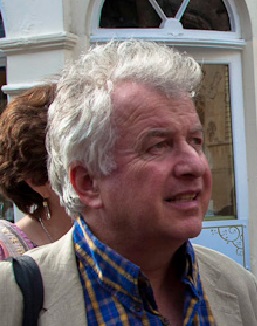
Dr Nicholas Campion

Dr Patrick Curry
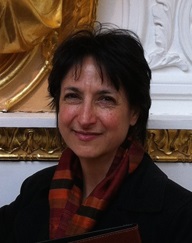
Dr Darrelyn Gunzburg
Speakers

Laura Andrikopoulos
Jung, Astrology and Modernity
It has been observed that there is a profound relationship between psychology and modern life, with modernity encompassing an increased awareness of individuality and an enlargement of inner space. Several twentieth-century modernising astrologers incorporated psychology into their astrological interpretations, particularly that of C.G. Jung (1875-1961). However, arguably Jung's psychology challenged the boundaries of modernity, raising questions about the modernity of 'modern astrology'. This talk will consider such issues as they fall within the wider framework of my ongoing PhD studies in the psychologisation of astrology in the 20th century.

Pamela Armstrong
Skyscapes of the Neolithic
This session looks at the skyscapes of people who lived in central, southern England over five thousand years ago. It explores the relationship these ancient communities may have had with their skies. In particular it looks at the radical architecture they introduced to their landscapes in the form of monumental tombs. These burial mounds have been described as 'the finest group of stone chambered tombs in England,' and this presentation will explore how and why these houses for dead appeared to reach for the sun, moon and stars.
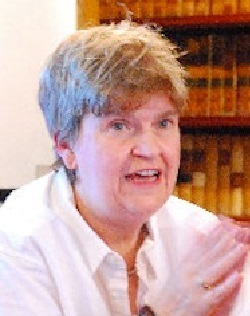
Dr Bernadette Brady
Astrology, a cosmological or a chaotic creature?
By challenging the role of cosmology as the sole defining force of the universe, that is that the world is understandable and predictable, a different ontology can emerge. This other ontology, the way the world works, was first express in the classical period as sympatheia and more recently, in varying forms, in the findings of chaos theory and strange attractors. This lecture considers that astrology is a vernacular expression of a chaotic ontology. Such a revaluating of the world in which astrology is 'rational' offers a deeper understanding of both astrology's cultural place and its practice in today's world.

Claire Chandler
What are the Greek Magical Papyri (PGM), and why are they such a valuable resource?
The Greek Magical Papyri (PGM) are a collection of documents from Hellenistic and Roman Egypt. This collection has been recovered over the course of the last two hundred years and provides us with authentic evidence of the ideas, beliefs, practices and voice of ordinary people of that time as opposed to the elite of that society. This paper will explore the history and provenance of these documents and their value as a scholarly resource.
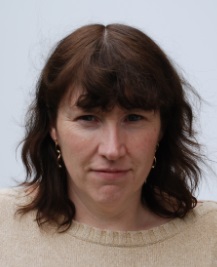
Frances Clynes
Online Astrology and its Impact on Astrological Practice
A large body of academic literature exists on the relationship between the Internet and religion, including studies of the practice of religious rituals online and the question of the validity of online rituals. This presentation will examine some of this literature and consider issues of validity surrounding the practice of astrology online. Sixty percent of professional astrologers conduct astrological consultations over the Internet. Taking the views of professional astrologers into account, this presentation will consider the question of whether cyberspace is an appropriate venue for an astrological consultation.
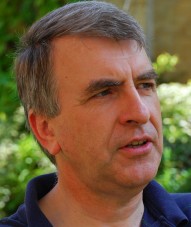
Bernard Eccles
21st Century Astrology: Judgement Without Consideration
Just as the rise of rational science in the 17th century changed the definition of what was considered valid knowledge, simultaneously rendering everything that had gone before not only obsolete but to some extent incomprehensible, the digital revolution is doing the same again, re-shaping everything in its own image. Astrology was excluded from the first revolution in thinking because it could not fit into a science of demonstrable cause and effect; in the 21st century it is failing again because it works through a process of analogy, and in the digital world there is no place for that. To say that A is like B, which astrology does all the time, is incomprehensible in a digital society, where A either equals B, or it does not. Is there a place for astrology in this new paradigm? And if it manages to adapt, as it has in the past, by sacrificing a part of itself, what will be left?
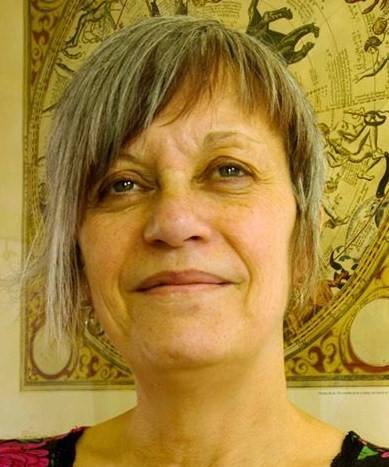
Liz Hathway
Saturn: An auto-ethnographic enquiry into contemporary astrological practice
Taking my teenage disappointment at being born under the sun-sign Capricorn as a starting point, my dissertation explored the negative Capricorn stereotype and its relationship to the planet Saturn. Via Facebook and in a Saturn Focus Group in Amsterdam, I engaged with other astrologers and attempted to unravel the many threads in the Saturn narrative and gain insight into the contemporary astrologer's view of Saturn. I presented myself to the reader as an astrologer and a researcher who engaged fully with the symbolism of the planet Saturn, in order to further my own understanding of the vast astrological landscape within which my research questions were framed.
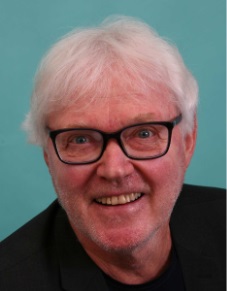
Tore Lomsdalen
A Solar Calendar in Stone?
The Maltese prehistoric megalithic temples are among the oldest freestanding structures in the world, outdating both Stonehenge and the Egyptian pyramids by about a millennium. This lecture is based on my research on the Mnajdra Temple that Neolithic builders were not only aware of the seasonal movements of the sun throughout a year, however, also implied this knowledge in temple expansions to be able to predict future religious, ceremonial, oracular or sacrificial events, feasts or celebrations. An animation film will show the sun and the moon's importance in their cosmology.

Chris Mitchell
The Provenance of 'Arabic' Astrological Techniques
Astrology blossomed in thirteenth-century Europe after numerous astrological, astronomical and scientific texts were translated from Arabic sources in the twelfth century. However, many astrological techniques attributed to the Arabs by medieval writers, such as Arabic Parts, were actually Hellenistic in origin, and the philosopher of science Pierre Duhem writing in 1911 claimed that 'There is no Arabian science' and that Arabic authors were merely 'faithful disciples of the Greeks'. In this talk, I will look at the provenance of astrological techniques described by medieval European authors as "Arabic", and show that while many of them had an earlier origin, that authors working in the Islamic world from the eighth to the twelfth centuries were innovators who made a unique contribution to medieval astrology.

Dr Fabio Silva
The Prehistoric Skyscapes western Iberian project: an overview and update
The landscapes of western Iberian Peninsula are marked by thousands of megalithic monuments of varied styles, dated to between the 4th and 2nd millenium BCE. Patterns in the orientation of similar megaliths betray a deliberate intent in their construction that can, in some cases, be related to topographic features or celestial events of prominence in the cosmology of their builders. This paper will give an overview of a research project that explores the role played by landscape and skyscape in the function and meaning of the megalithic monuments of western Iberia, as well as provide an update based on fieldwork conducted during the spring of 2015.


