Speakers
Keynote Speakers

Name: Nick Campion
Conference Introduction: At the Crossroads
Abstract:
This conference is the result of a collaboration the Sophia Centre, a research and teaching centre at the University of Wales Trinity Saint David, UK, and Yildiz Technical University, Istanbul. When we chose Istanbul as the venue we had in mind the unique position of the city of Byzantium-Constantinople-Istanbul as a unique cultural as well as geographical crossing point between Asia and Europe. Nick will open the conference, welcome the collaboration between the two Universities, and anticipate some of the key conference themes.

Name: Robert Morrison
Averroës, Astronomy and Astrology in Istanbul and Italy
Abstract:
The sky has been a text read worldwide. The night sky contained clues about God’s relationship with the cosmos and with humans. In this lecture, I will describe how interpretations of the night sky traveled through the Eastern Mediterranean in the fifteenth and sixteenth centuries. Astrologers, philosophers and Qabbalists all read the night sky and found a God who was proximately involved with creation. As the potential rewards of learning about God’s relationship to the cosmos were high, exchange in multiple fields followed. A trans-regional conversation about the sky was facilitated by intermediaries whom I call merchants of knowledge. Astrology, for the merchants of knowledge and their contacts, was a means of understanding God’s actions and one’s religious obligations. Astrological knowledge, like the manuscripts in which it traveled and the instruments with which it was practiced, was valuable. Practices of astrological forecasting were ways to manage anxieties. Given the complexity of creation, astrology was necessary to understand the actions of an omnipotent and omnivolent God. Astrology was not to help one game the system; rather better astrological knowledge helped one optimize one’s life, including religious observance.Though the Jewish merchants of knowledge, along with their Christian and Muslim contacts, disagreed about astrology, the discussion was productive. But astrology implied that God’s relationship to creation had to fluctuate in order to account for different events on earth. Philosophers denied judicial astrology for a host of reasons, foremost among them that God would have to change in order for God’s causal relationship to creation to vary. Because Averroës (Ibn Rushd, d. 1198) believed that God had a direct, unmediated relationship with the outermost orb of the cosmos, astrology provided no insight into God’s relationship with the cosmos. Moreover, Averroës rejected, on philosophical grounds, the structures of orbs necessary to explain astrology. Scholars of Qabbalah agreed with Averroës’ positions on cosmology and astrology to support metempsychosis. And Averroës’ critiques of Ptolemaic astronomy became the scaffolding for exchange of innovative theoretical astronomy by the merchants of knowledge. The merchants of knowledge trafficked information in multiple disciplines; the cultural importance of interpreting the night sky created the market for their information.

Name: John Steele
The Astral Sciences under the Achaemenid Persian Empire
Abstract:
The Achaemenid conquest of Babylonia in 539 BCE brought a period of a little more than two centuries of Persian rule across the Ancient Near East. At the time of the conquest there had already been active practice of the astral sciences in Babylonia for more than a century, including regular astronomical observation and systematic record-keeping, the development and use of methods for predicting future astronomical phenomena, and systems of astrology. Over the course of the period of Persian rule, many further developments were made within Babylonian astral science including the invention of the uniform zodiac of twelve 30-degree signs, new forms of astrology including personal horoscopy, and, most strikingly, the development of mathematical astronomy. In addition, responsibility for the regulation of the Babylonian calendar passed to astronomical officials in the Babylonian temples during this period. The fact that developments and changes in practice occurred during the period of Achaemenid Persian rule raises the question of whether these developments occurred as a result of the Persian conquest. They also raise the question of the circulation of astronomical knowledge between the Babylonians and the Persians. In this paper I will present some preliminary remarks in response to these questions.

Name: A. Tunç Şen
What Is in a Name? Munajjims as Astral Experts
Abstract:
Who were the munajjims, and what did their title truly signify? This talk introduces both the world and the word of munajjims in the Ottoman Empire and the broader Islamicate realm. Although often translated simply as “astrologers,” munajjims inhabited a far broader and more complex intellectual landscape. Their expertise blended astronomical calculation, astrological interpretation, timekeeping, mathematics, and the wider sciences of the unseen. Drawing on examples from state archives, court chronicles, astronomical tables, almanacs, biographical dictionaries, scientific treatises, and illustrated manuscripts, this talk explores how munajjims worked, trained, and competed with other experts of “occult science,” including mystics, dream interpreters, and lettrists. It also examines how their authority was negotiated: What made someone an expert? How did the court decide whom to trust? And why did debates over astral knowledge matter in politics, religion, and daily life?
Invited Speakers

Name: Rana Brentjes
Creating an Image Database of al-Sufi’s Book of the Images of the Fixed Stars and Exploring Cross-Cultural Influences
Abstract:
In my talk, I will present the development of a comprehensive image database focused on the astronomical illustrations and diagrams found in Abd’ al Rahman al-Sufi’s seminal 10th-century work, Book of the Images of the Fixed Stars. The project aims to collect, catalogue, and analyse visual materials from more than 100 surviving manuscripts, encompassing texts in Arabic, Persian, Latin, as well as fragmentary Ottoman Turkish summaries. By making these resources accessible to scholars and the public, the initiative goes beyond mere preservation, offering a robust research tool for investigating the cross-cultural influences present in al-Sufi’s work by tracing motifs, iconographies, and scientific concepts as they migrated and transformed across at least a dozen cultures, including Persian, Greek, Indian, Ottoman, Arabic, and European traditions.
The cross-cultural activities in the domain of constellation imagery far surpass the textual multiplicities achieved through translation. In the extant copies of al-Sufi’s treatise, at least a dozen distinctive features reflect the diverse material and artistic cultures of the Middle East, North Africa, Southern and Eastern Europe, Central and South Asia. This rich array of visual material motivates the creation of an image database that enables us to comparatively analyse the relationships between these cultural models.
By integrating comparative visual analysis with metadata on manuscript provenance and artistic styles, this project seeks to illuminate how astronomical knowledge and artistic representation were shaped by intercultural exchanges. The methodology includes image acquisition, database design, and the establishment of metadata standards. In my presentation, I will share the initial results achieved up to the conference, offering interpretations concerning the interconnections, regional specificities, and long-term stability of the motifs. Ultimately, this project seeks to foster new interdisciplinary approaches to the history of science, manuscript studies, and art history, highlighting the dynamic interplay between cultures in the development of astronomical knowledge.

Name: Naser Dumairieh
Astronomy in the Ottoman Hijaz: Texts, Figures, and Practices
Abstract:
Studies on the intellectual history of the Ottoman Hijaz have been mainly shaped by the prominence given to the rise of Wahhabism, which has often led to a loss of interest in the period before the movement. Recent scholarship, however, has questioned this narrative, demonstrating that the Hijaz held a significant site of philosophical, theological, and Sufi debate and textual production in the early modern period. This paper follows this revisionist line, showing that astronomical texts continued to be read, studied, and produced, and that astronomical practices persisted in the region in the early modern period. In doing so, it seeks to make a historiographical intervention into Islamic astronomy studies, which have thus far paid relatively little attention to
the Hijaz.

Name: Martin Gansten
Byzantine Astrological Doctrines in India? On the Identity of ‘Romaka’ in Tājika Texts
Abstract:
Sanskrit authors on Perso-Arabic (Tājika) astrology from the thirteenth to the seventeenth century often invoke early non-Indian authorities by name. At least some of these authorities are likely to be historical persons, such as ‘Khindi’ (presumably Yaʿqūb ibn Isḥāq al-Kindī, the ‘philosopher of the Arabs’), while others may be wholly or partly mythical. One such elusive but intriguing figure is Romaka or ‘the Roman’, a name associated in the texts with a distinctive set of doctrines including the use of the tropical zodiac, not generally favoured by Tājika authors. Taken together with the fact that the designation ‘Roman’ by this time typically referred to the Byzantines (identifying in Greek as ῥωμαῖος, Arabic rūm), these doctrines suggest a possible distinct Byzantine element in the astrological corpus transmitted to India during the period of Islamic rule.

Name: Dorian Greenbaum
Edessa and Astrology: The Approaches of Bardaișan and Theophilus
Abstract:
From late antiquity onwards, the city of Edessa was a crossroads not only in trade, but as a vital centre for the exchange of philosophical, scientific, religious and other cultural beliefs. These included a notable interest in astrological theory and practice that encompassed polytheistic, Christian and, later, Islamic views. This paper will explore the use of astrology in Edessa in the period between ca. 150 and 800 CE. We shall begin by examining Edessa’s location in ancient Syria when Christianity was expanding into such places with a long tradition of polytheism in which astrology flourished. Then, using the exemplars of Bardaișan, a historian, religious writer and astrologer; and Theophilus, a court astrologer and translator who also wrote a narrative history of the area in which he lived, we will shift our focus from the general to the personal, demonstrating the uses of astrology by two very different Edessan astrologers.

Name: Stoyanka Kenderova
Astronomical Works preserved in the Waqf Libraries in Вulgaria during the Ottoman Period
Abstract:
Along with works in the fields of religious sciences, philology, philosophy, history and medicine, works on astronomy, mathematics and geometry were also preserved in the waqf libraries in Bulgaria. The earliest author appears to be Mahmud al-Jaghmini (b. C. 1220) – an astronomer, mathematician, and physician who composed „A Brief Exposition on the Science of Astronomy“. In 1410-1411, Qadi-zadeh ar-Rumi composed a commentary on this work. The next author whose presence we find is Nasir ad-Din ad-Tusi (1201-1274), a famous scholar-encyclopedist. In 1258-1259, he founded an astronomical observatory in Maragha (Southern Azerbaijan), where the “Ilkhanian Astronomical Tables” (Zij-i Ilkhani) were compiled under his leadership. The most famous zijs in the history of astronomy include also Ziğ-i Ulugh Bek, Zij-i Farisi (Zij-i Yamini) and az-Zij ash-Shamil by al-Abhari (b. 1263), known as a philosopher. The waqf libraries also contain treatises on the basic instruments for observing the stars and performing various calculations, as well as calendars used by different peoples.

Name: R. Hakan Kırkoğlu
Astrology as an institutionalized science at the Ottoman Court: Musazâde Mehmed Ubeydullah Efendi and the Horoscope of an Ottoman Prince
Abstract:
This lecture examines the role of astrology in the late eighteenth-century Ottoman court through a close reading of a horoscope prepared by Musazâde Mehmed Ubeydullah Efendi, the Müneccimbaşı (chief astrologer) under Sultan Abdülhamid I. Preserved in the Kandilli Observatory collection, this horoscope was composed for prince Süleyman and combines ornate panegyric prose, Qurʾānic references, and detailed astrological techniques.
The analysis highlights how Musazâde employed Greco-Islamic methods—rectification of the ascendant, calculation of the haylāj (hyleg) and kadhkhudā (alcocoden), interpretation of the twelve houses, and planetary lots—while citing authorities such as Ptolemy, Hermes, and Nasīr al-Dīn al-Tūsī. Beyond its technical precision, the horoscope functioned as a political text, assuring the court of dynastic legitimacy and cosmic harmony in a period of crisis following the Treaty of Küçük Kaynarca (1774).
Placed in comparative perspective, the Ottoman case reveals both parallels with European royal horoscopes and significant divergences: whereas Enlightenment Europe increasingly marginalized astrology, the Ottoman court retained it as an institutionalized science. The study thus underscores astrology’s continued importance in Ottoman intellectual culture and its role as a medium linking celestial knowledge to political authority.

Name: Ulla Koch
The Reception of Mesopotamian Astrology in Hattusas
Abstract:
Among the wealth of cuneiform tablets excavated at the ancient capital of the Hittites at Hattusa in central Anatolia, were also a large number of texts concerning astrology. Astrological omens were just one kind of divination which the Hittites imported from Babylonia. Of course, there existed native Hittite forms of diivination as well, but the ancient scholarly traditions of Mesopotamia interested and inspired the neighbouring cultures. However, the Hittites did not just import and copy texts from Mesopotamia, they also translated them and modified them to some extent. In this talk I will take a look at the cuneiform sources from Hattusas both in Akkadian and Hittite to investigate what aspects particularly interested the Hittite scholars and how they worked with the material.

Name: Jeffrey Kotyk
Are the Planets All Evil? Religious Perspectives in Late Antiquity
Abstract:
The dichotomy of malefic versus benefic planets in Hellenistic astrology is fully understood in modern scholarship, but when we turn to religious texts of late antiquity there are variable views on the qualities of not only the planets, but also the fixed stars. Notions of obedience are also known in Judaism and Islam. In the Old Testament, Amos 5:26 mentions as an idol the
stellar god kîyûn, which likely corresponds to Akkadian kajamānu (Saturn). Genesis 37:9 mentions the Sun, Moon, and “eleven stars” bowing down to Joseph during his dream. This is echoed in the Quran (Surah Yusuf 12;4). Manicheaism viewed all the planets and stars as evil, apart from the Sun and Moon, whereas in Zoroastrianism, the fixed stars were good, while the planets were seen as disorderly and demonic. Late Zoroastrian literature furthermore speaks of
the Head and Tail of a dragon (representing the lunar nodes) and “eleven planets,” which appear to have some connections with earlier astrological concepts in India. We know that during the third century CE, the Sasanians had translated some Indian materials, so it is necessary to consider the navagraha from Sanskrit sources. This presentation will demonstrate that for late-antique religions, the typical Hellenistic view on the planets was not evidently
normative. The varied views on the planets helps to explain a number of theological, artistic, and cultural phenomena, which in turn set the foundation for later developments in Europe, the Islamic world, and East Asia.

Name: Luís Campos Ribeiro
Comparing astrological practices: between Persia and Europe
Abstract:
Astrological practice is evidently one of the best cases of cross-cultural transmission, since it was a common practice among different cultures. While it transversed different epochs, ethnicities, religions, and philosophies, the corpus of astrological methodologies appears to have maintained its core principles. This continuity is, however, populated by derivations associated with different periods and cultures. These differences become particularly evident in the practical application of astrology. Therefore a parallel analysis of these practices can be enlightening to the transmission and development of astrological doctrines. Stemming for a joint research with Dr. Hamid Bohloul this lecture will compare medieval European and Persian horoscopy, highlighting differences and similarities in notation and methodologies of chart judgment.

Name: Fabio Silva
At a crossroads in space and time: the archaeoastronomy of the Upper Iron Gates
Abstract:
This talk will critically reassess archaeoastronomical interpretations of the important archaeological site of Lepenski Vir within the wider Mesolithic and Early Neolithic landscape of the Iron Gates (Danube Gorges in modern day Serbia), a region of exceptional importance for understanding the dispersal of Neolithic lifeways from Southwest Asia into Europe. Rather than treating Lepenski Vir as an isolated or anomalous phenomenon, this talk will situate it alongside neighbouring and contemporaneous sites such as Padina and Vlasac, emphasising shared horizons, riverine practices, and long-term engagements with seasonal time.
The Iron Gates formed a persistent cultural corridor and ecological niche in which Mesolithic (c. 9200 - 6000 BC) hunter–fisher–gatherer communities maintained dense, semi-sedentary settlement patterns prior to, and during the arrival of Early Neolithic (c. 6000 – 5400 BC) farming material culture ultimately stemming from the Near East. Radiocarbon dating has demonstrated that architectural elaboration, sculptural practices, and subsistence change at Lepenski Vir occurred over a protracted and complex sequence, overlapping with both forager and early farming lifeworlds. This provides a robust framework for evaluating claims that the site functioned as a solar or calendrical observatory, including proposals relating to the so-called double sunrise phenomenon at summer solstice.
By taking a fresh look at Lepenski Vir in conjunction with neighbouring Padina and Vlasac—sites sharing similar trapezoidal architecture, topographic constraints and subsistence regimes—the talk will argue that skyscape practices in the Iron Gates were embedded in everyday river-oriented routines rather than any formalised observations. Apparent astronomical patterning is therefore approached as part of an embodied, place-based engagement with seasonal rhythms, mobility, and resource scheduling, rather than as evidence for specialised or proto-scientific astronomy. This comparative perspective will reframe archaeoastronomy as a tool for understanding cultural continuity and transformation at a key Eurasian crossroad during the Mesolithic to Neolithic transition.

Name: Hasan Umut
Astronomy in the Ottoman Hijaz: Texts, Figures, and Practices
Abstract:
Studies on the intellectual history of the Ottoman Hijaz have been mainly shaped by the prominence given to the rise of Wahhabism, which has often led to a loss of interest in the period before the movement. Recent scholarship, however, has questioned this narrative, demonstrating that the Hijaz held a significant site of philosophical, theological, and Sufi debate and textual production in the early modern period. This paper follows this revisionist line, showing that astronomical texts continued to be read, studied, and produced, and that astronomical practices persisted in the region in the early modern period. In doing so, it seeks to make a historiographical intervention into Islamic astronomy studies, which have thus far paid relatively little attention to the Hijaz.
Speakers

Name: Aleksey Arapov
The Sacred «Book» of the Cosmos as a Subject of Timurid Empire and Renaissance
Abstract:
The talk analyzes the influence of the lettrist-astrological concepts of the new «Ikhwan al-Safa», inspired by the "Cairo prophet" Sayyid Ahlati, on the intellectual field of the Timurid Empire. Among these is the interpretation of the Cosmos as a «text», formed by astronomical observations, expressed through geometric structures and numbers, and containing knowledge of the «will of the heavens». It reconstructs the activity of the eastern wing of the new «Ikhwan al-Safa», led by Ibn Turka, which elevated the status of astronomy-astrology at the Timurid courts to that of an imperial science. In this context, the study examines Prince Iskandar's preface to the manuscript «Jami-i Sultan», which obliges the ruler to knowledge of the «book» of the Cosmos, as well as the works of scientists from the Prince Ulugh Beg's observatory in calculating with high precision the coordinates of stars and the motion of celestial bodies as a basis for astrological predictions. It is hypothesized that Ulugh Beg Observatory's fundamental contribution to the Renaissance ”a purely mathematical model of the Cosmos” was motivated by a lettrist encoding algorithm, the inverse of deciphering the hidden meanings of the Quran.

Name: Jean Arzoumanov
The Indian science of auspicious hours in Persianate astrology
Abstract:
Sanskrit electional astrology (muhūrtaśāstra) offers a systematized method for determining auspicious and inauspicious moments according to certain celestial configurations (e.g., karaṇa half lunar days). Already described in al-Bīrūnī’s astrological works, muhūrtaśāstra was later adapted in the medieval period by Arabic and Persian scholars and integrated into their own system of electional astrology (ikhtiyārāt). Certain procedures are thus transmitted in classic works by al-Rāzī, Bīrjandī, and Kāshifī.
A further development took place in early modern India, when Persianate munajjims incorporated new concepts and methods from the Sanskrit tradition. Their aim was to craft improved horoscopes and prognostication techniques for patrons and clients seeking cross-cultural astrological expertise. By analysing a set of Persian almanacs produced in North India between the 17th and 19th centuries, this paper examines how Indian electional astrology entered the everyday practice of astrology by Persianate Muslim scholars, situating South Asia as an active zone of methodological innovation within the broader Persianate astral sciences..
Name: Hoda Ata
The concept of time in ancient nations
Abstract:
This research investigates the conceptualization of time in ancient Iranian mythology by analyzing the deities Zurvan (infinite time) and Mitra (light and covenants) within Zoroastrian cosmology. Through comparative analysis with Greek (Kronos), Hindu (Kala), and Roman (Mithraism) traditions, it highlights divergent cultural interpretations—time as neutral, destructive, or cyclical. The study examines symbolic representations in art (e.g., the "Lion and Bull" relief at Persepolis) and astronomical frameworks in texts like the “Bundahishn”. By bridging mythology, archaeology, and the history of science, it reveals the profound philosophical implications and enduring legacy of ancient temporal concepts on subsequent timekeeping and cosmological thought.

Name: Khasawneh Awni
From Babylon to al-Andalus: The Transmission of Astral Sciences between Civilizations and Their Impact on Islamic and Latin Thought in the Middle Ages
Abstract:
This paper explores the historical trajectory of the transmission of astrological and astronomical knowledge from ancient Mesopotamia to the Islamic world, and subsequently to Latin Europe during the Middle Ages. It highlights the pivotal role of cultural crossroads such as Istanbul in facilitating this intellectual exchange.
Through the study of classical texts and historical manuscripts, the paper examines how Babylonian and Hellenistic concepts were integrated by prominent Islamic scholars such as Al-Farabi, Thābit ibn Qurra, and Ibn Sina, and how these ideas were later translated and adapted in Latin Europe through centers such as Toledo.
The research provides a comparative analysis of theoretical and applied astrology across these civilizations, emphasizing the intercultural influences that shaped medieval astronomical traditions.

Name: Alberto Bardi
Reciprocity without Consensus: Astronomy and the Question of Autonomy in Constantinople–Istanbul
Abstract:
This paper explores the exchange of astronomical knowledge between Muslim, Christian, and Jewish communities in Constantinople–Istanbul from late Byzantium to the early Ottoman Empire. Divided by religious differences, these groups still collaborated intensively, sharing astronomical texts and tables without reaching doctrinal agreement. The study shows that astronomy acted as a shared space, where practical needs—such as calendar reform, timekeeping, and navigation—facilitated cooperation despite theological divisions. Mathematical and tabular practices served as “boundary objects,” bridging linguistic and confessional gaps while being understood in different ways by each group. The paper also examines how scholars from different traditions justified this exchange, often separating natural knowledge from revealed truths or pragmatically using foreign astronomical data. These interactions created zones of “reciprocity without consensus,” where practical reliability some times superseded religious differences, though polemical responses also showed the limits of such collaboration.
Modern scholarship on the history of the mathematical sciences has devoted substantial attention to mathematical astronomy and observational practice. Yet it has paid comparatively little attention to the works and scholarly careers of practitioners of mathematical astrology. For instance, treatises central to courtly astrology as a mathematical practice—such as nativity books—remain marginal in current historiography. A significant case is a treatise on the birth horoscope of Ulugh Beg’s second son, Prince ʿAbd al-ʿAzīz, born in Samarqand in 1429. Ulugh Beg commissioned Muʿīn al-Dīn al-Kāshī (d. after 1444) to cast the child’s horoscope and compose the accompanying nativity book. This paper addresses this historiographical gap by briefly introducing the genre, closely examining this work (developed in collaboration with Dr Luís Ribeiro), and reconstructing the scholarly activities of its author, who remains little known in current scholarship despite having been a respected and influential munajjim in his time.

Name: Hamid Bohloul
Beyond Samarqand’s Observatory: Muʿīn al-Dīn al-Kāshī’s Nativity Book for Ulugh Beg’s Son
Abstract:
Modern scholarship on the history of the mathematical sciences has devoted substantial attention to mathematical astronomy and observational practice. Yet it has paid comparatively little attention to the works and scholarly careers of practitioners of mathematical astrology. For instance, treatises central to courtly astrology as a mathematical practice—such as nativity books—remain marginal in current historiography. A significant case is a treatise on the birth horoscope of Ulugh Beg’s second son, Prince ʿAbd al-ʿAzīz, born in Samarqand in 1429. Ulugh Beg commissioned Muʿīn al-Dīn al-Kāshī (d. after 1444) to cast the child’s horoscope and compose the accompanying nativity book. This paper addresses this historiographical gap by briefly introducing the genre, closely examining this work (developed in collaboration with Dr Luís Ribeiro), and reconstructing the scholarly activities of its author, who remains little known in current scholarship despite having been a respected and influential munajjim in his time.

Name: James Brannon
Concerning the Origin of the Middle-Eastern Terms “Chaldean” and “Egyptian” in Greco-Roman Planetary Orders
Abstract:
This paper examines two ancient planetary sequences – the “Chaldean” and “Egyptian” orders – as markers of celestial thought shaped by the cross-cultural cosmic traditions between Mesopotamia, Egypt, and the Greco-Roman civilization. The “Chaldean order,” with the Sun centrally placed among the seven wandering bodies, first appears with Archimedes and is later explicitly tied to the Chaldean tradition by Cicero. The “Egyptian order,” which situates the Sun directly above the Moon but below the remaining planets emerges in Platonic cosmology and only later is attributed to Egyptian sages by Macrobius. Through a comparative chart delineating ancient adherents of these systems, and analysis of statements by Berossos, Cicero, Achilles, and Macrobius, I argue that the “Egyptian order,” with unclear roots in both Mesopotamia and Egypt is an “external” product, while the “Chaldean order” is an “internal” product, of the Greco-Roman world. The two orders act as symbolic “celestial crossroads” where regional cosmological traditions were re-interpreted and embedded in Hellenized astral thought.

Name: Gaye Danışan
Between Tables, Maps, and Diagrams: An Ottoman Manuscript of Time, the Heavens, and the World
Abstract:
This paper examines a composite Ottoman manuscript preserved in the private collection of Talat Öncü (Ankara, Türkiye). The manuscript brings together materials associated with various forms of perpetual calendar traditions circulating in the Ottoman world, alongside computational tables, diagrammatic devices, and cosmographical representations. Its contents include various approaches to determining the first day of the lunar month—based on calculation and observation—as well as materials on perpetual calendars, tables of solar longitude, eclipse-related materials, and temporal hours. A three-plate Ottoman volvelle, diagrams depicting lunar–planetary configurations, and two world maps further illustrate the diversity of materials contained in the manuscript. Rather than constituting a uniform work, the manuscript appears as a composite compilation that brings together materials sharing a common field of interest and function. Examined from this perspective, the manuscript offers insight into the composite and functional nature of Ottoman calendrical, astronomical, and cosmographical manuscript culture.
Keywords: Ottoman manuscripts; calendrical traditions; astronomical tables; cosmography; volvelles.

Name: Karine Dilanian
From the prophetic Arab-Persian cosmic cycles to Johannes Kepler's ‘Harmony of the World’
Abstract:
During Late Antiquity and the Early Middle Ages, Sasanian Iran served as a crucial intermediary in the dissemination of astronomical and astrological knowledge between the Eastern and Western worlds. One key element was the idea of prophetic cycles based on conjunctions between Saturn and Jupiter, which shaped the course of human history and marked the dates and eras of world events. Following the Islamic conquest, this concept permeated the Arab world. Subsequently, in the 12th century, it was introduced to Europe through a Latin translation of Abu Mashar ibn Balkhi's Book of Religions and Dynasties, which served as the bedrock for European prognostic almanacs for centuries. While Johannes Kepler ultimately rejected the conjunctional theory as a predictive model, this study will demonstrate how it nevertheless informed several of Kepler's innovative concepts and became the foundational framework for his groundbreaking scientific, philosophical, and political-utopian work, The Harmony of the World.

Name: Arezoo Egherlou
Why the Moon and Sun Appear Larger on the Horizon? An Argument Based on Optics in the Commentary on the Tadhkirah by Fatḥ Allāh Shirwānī
Abstract:
This paper examines an optical explanation of a long-standing astronomical problem as discussed in the Sharḥ al-Tadhkirah al-Naṣīriyya by Fatḥ Allāh Shirwānī (d. 891 AH). Ptolemy addressed this phenomenon in the opening chapters of the Almagest, attributing it largely to atmospheric conditions; however, Ibn al-Haytham later criticized this explanation in al-Shukūk ʿalā Baṭlamyūs. This discussion entered the Islamic astronomical tradition, and figures such as Quṭb al-Dīn Shīrāzī and commentators on Naṣīr al-Dīn Ṭūsī’s Tadhkirah including Niẓām al-Dīn Aʿraj Nīshābūrī and Sayyid Sharīf Jurjānī also engaged with the problem, until Fatḥ Allāh Shirwānī treated it more extensively within his commentary on the Tadhkirah.
Focusing on Shirwānī’s analysis, this paper argues that his commentary represents a meaningful encounter between optical theory and astronomical practice. Shirwānī explains the apparent magnification of celestial bodies through two causes: an intrinsic cause grounded in the refraction of light at the horizon, and an extrinsic cause related to atmospheric vapors. By situating these arguments within the transmission and continuity of Ibn al-Haytham’s optical theories in later astronomical commentaries, the paper highlights an important case of interdisciplinary exchange between optics and astronomy in the medieval Islamic scientific tradition.

Name: Meltem Ersoy
Perspectives on Sufi Cosmology in the Rasāʾil of the Ikhwan al-Safa
Abstract:
This paper examines Sufi cosmology in the 10th-century Rasāʾil of the Ikhwan al-Safa, composed in Basra in the eastern Islamic world and drawing on a wide cross-cultural horizon. The Ikhwan conceptualize the cosmos and the human being as mutually mirroring “books” of God and identify astrology as the key symbolic science that mediates between reason and maʿrifa, articulating this correspondence and concentrating the doctrinal content of Sufism. Drawing on Platonic and Aristotelian philosophy, the Ptolemaic tradition, and the prophetic figure of Idrīs/Hermes as founder of the heavenly sciences, the Rasāʾil present astrology as sacred knowledge that prepares the soul for ascent and return to the terrestrial realm in a state of spiritual refinement in which fate becomes negotiable. Framed by the theme “Celestial Crossroads,” this paper explores how astronomy and astrology function in Sufi cosmology as mediating tools for encounters, intersections, and influences linking cultures and religions.

Name: Dallin Evans
Astronomers and Astrologers in the Caliph’s Court: Mathematical developments in tenth-century al-Andalus
Abstract:
This paper is situated within this conference’s category of astronomy and astrological influence on architecture, while also centering on the historiographic debate concerning the identification of two tenth-century Andalusi intellectuals named Maslama. Nineteenth- and early twentieth-century scholarship conflated them into a single figure, until Maribel Fierro’s 1996 authoritative article demonstrated their distinct identities: Maslama al Majrīṭī (d. 1007 CE) the court astronomer to the Umayyad Caliphs of al-Andalus, and Maslama Ibn Qāsim al-Qurṭubī (active between 940-959 CE) the astrologer and traditionalist who instructed the sons of the Caliph and young aristocrats in Madīnat al-Zahrāʾ, the palatine complex near Cordoba Spain. New scholarship has refuted her claim. The latter astrologer is thought to be the author of the infamous astrological compendium Picatrix, which profoundly influenced medieval and early modern Europe, as well as the Rutabat writte n between 950-953 CE, and the Ghāya 954-959 CE. My argument is that within this court patronage we have the first intentional development of the category of practical mathematics, which would influence the creation of the urban complex Madīnat al-Zahrāʾ—with its astronomically accurate calculations of the new Congregational Masjid, integration of a system of geometric proportioning to the layout of the complex, and development of sophisticated geometric motifs.
Name: Orhan Güneş
Calculation in Mesopotamian Astronomy: Analysis of System B for Jupiter
Abstract:
Mathematical astronomy can be defined as the prediction of astronomical phenomena with the using of mathematical algorithms. This science is built upon divination, centuries of systematic observations, and the calculations used to derive conclusions from these observations. Mesopotamian mathematical astronomy, dating back to the 5th century BCE, the first empirical science and the first exact science to use mathematics as a tool.
The Babylonians used various methods to predict the positions of the planets. In the modern era, these are called "Systems." One of these, System B, assumes a velocity oscillating between maximum and minimum values without dividing the Zodiac into fixed velocity zones.
Babylonian tablets mainly contain calculations related to Jupiter. In this study, the first 20 lines of cuneiform ACT 622, which pertains to Jupiter, were analyzed, and the parameters belonging to System B were derived.

Name: Hee Sook Lee-Niinioja
Star and Constellation Myths as Symbolic Stories in Celestial Patterns in Medieval Sacred Spaces: Church/Mosque/Temple
Abstract:
The medieval period witnessed a convergence of architecture and cosmology. Gothic churches integrated zodiac imagery, rose windows, and precise east–west orientations, transforming the liturgy into a cosmic calendar that linked human ritual to divine order. In Islam, starry muqarnas domes and celestial mosaics create the impression of infinite heavens, reflecting God’s unity-infinity through geometric repetition. Hindu temples often embody solar cosmology in their designs, often featuring the Sun God Surya's chariot.
These traditions incorporate astronomical motifs, cosmic alignments, and celestial imagery to position worshippers within a universal order. The medieval synthesis of art-science-spirituality revealed a desire to emulate the heavens on earth. Each monument narrates humanity's shared story: churches (a lantern of starlight); mosques (a vault of infinity); temples (a solar chariot). They reveal medieval builders seeking souls to construct devotional places and inscribe the cosmos into stone, while inviting worshippers to experience themselves as participants in celestial harmony

Name: Dragana Van de Moortel-Ilić
The Narthex of the Lesnovo Monastery: Rulership, Dress, and Celestial Imagery
Abstract:
The ktetor of the fourteenth-century Lesnovo Monastery, Jovan Oliver, an influential nobleman of the Serbian kingdom, appears to have had a mixed Serbian, Bulgarian, and Byzantine background. On the mural paintings, he is depicted wearing a Mongol cloud collar over Byzantine court attire, a striking marker of cultural convergence. The oldest, and unique, depiction of the Laudate Psalms in the Narthex of the Lesnovo Monastery incorporate Zodiac signs, personifications of planets, and the Sun and the Moon. The same composition presents Jovan Oliver alongside the Serbian Emperor Stefan Dušan and the already-deceased Byzantine Emperors Andronikos II and Andronikos III Palaiologos. Historical sources suggest that Jovan Oliver maintained contact with the Ottoman Sultan Orhan Gazi. This paper explores the cosmological imagery in the iconographic programme of the Lesnovo Monastery as a reflection of the wide network of political and cultural relationships surrounding its patron.
Name: Sediqeh Pourmokhtar
Relationship between astronomy and motifs in Ilkhanid tiles (14th century), drawing on the era's scientific advancements and artistic expressions.
Abstract:
This study explores the intricate relationship between astronomy and motifs in Ilkhanid tiles (14th century), drawing on the era's scientific advancements and artistic expressions. During the Ilkhanid period, under Mongol patronage, astronomy flourished through observatories like Maragheh, established by Nasir al-Din al-Tusi, integrating Persian, Islamic, and Chinese influences. Tile motifs often incorporated celestial themes, such as zodiac signs, stars, and planetary alignments, symbolizing cosmic order and divine harmony in architectural decoration. For instance, star-shaped tiles and interlocking geometric patterns reflected astronomical calculations, while narrative scenes from historical texts like Rashid al-Din's Jami' al-tawarikh depicted celestial events, blending science with iconography. These designs, produced in royal workshops, not only adorned mosques and palaces but also conveyed ideological messages of imperial legitimacy tied to the heavens. By analyzing text- image connections in manuscripts, this research reveals how astronomy enriched tile aesthetics, using motifs like comets and constellations to evoke eternal cycles and intellectual patronage . This fusion highlights the Ilkhanid era's role in advancing astrological art, influencing later Persian traditions.

Name: Zachary Schwarze
Set Sun, Shudder Sky: Astral Dogmatics in Early Byzantine Laments
Abstract:
In the discipline of cultural astronomy, treatments of early Christian and patristic sources generally emphasize the reception of Hellenistic astral knowledge, whichtheologians in lateantiquityleveraged in efforts to codify and promulgatedogma. Christian astral practices in this period was especially concerned with calendrical calculationsfor Easter (the computus tradition) and supercessionist interpretations of the Book of Genesis (the hexameral literature), while judicial astrology persisted despite formal ecclesiastical condemnation. This paper shifts focus from theological discourse and circulation among elites to the channels by which Christianized astral knowledge—especially its revised celestial hierarchy—was disseminated to and circulated among the laity in the Eastern Mediterranean. Where previous studies have treated this matter in examinations of iconography, architecture, and hexameral homiletics, I propose an additional and underexplored site of transmission: on the homiletic and hymnal traditions of lament, a form that express profound grief and horror at the sufferings of Jesus and Mary. I use a selection of early Byzantine laments incorporating Christianized astral knowledge—from Constantinople, Cappadocia, and Alexandria—to argue fo aural sensation as an affective conduit by which the laity could cultivate embodied understanding of celestial hierarchy.

Name: Ozan Sanlı Sentürk
The Prostration of the Shadow: Cosmology, Consciousness, and the Semantics of Zill in Qur’an Raʿd 13:15
Abstract:
This study examines the concept of ‘the prostration of the shadow’ in Qur’an Ra‘d 13:15 by integrating cosmological, psychological, astrological, and Sufi perspectives. The Qur’ānic term zill encompasses a wide semantic field that includes both the dynamic shadow (fay’)—formed by the obstruction of light and changing according to its movement—and the static shadow found in regions where light never reaches. In this respect, it is interpreted in parallel with invisible structures in modern cosmology (dark matter and dark energy). Within this framework, the shadow is understood not only as an element that renders the boundaries of light perceptible, but also as a structure that makes visibility possible; furthermore, it is regarded as the component that produces the dialectic between the illusion of separateness and the return to unity. At the psychological level, the shadow enables the self to become functional—allowing identity to operate without producing it—and is examined across multiple layers: consciousness, the subconscious, the collective unconscious, and the awareness of Rabbi Hass (the individualized mode of divine guidance). In this way, the study demonstrates that prostration symbolizes the alignment of both the manifest and hidden dimensions of existence with the divine order, uniting cosmological symbolism with inner transformation

Name: Yunli Shi
The Chinese-Islamic Observatory in Beijing: An Overlooked Center for Islamic Astronomy in East Asia
Abstract:
Recent studies of two sets of Chinese-origined Persian Zijies preserved in the National Library of France and the Institute for Oriental Studies in Saint Petersburg show that they were based on the work of the Chinese-Islamic Observatory in Beijing of the Yuan Dynasty. The Zijies had their roots in the Islamic world but contains new improvements in a number of astronomical parameters and important adjustments fitting the Chinese tradition in calendrical astronomy. Most importantly, these Zijies turn out to be the direct source of the Chinese-Islamic System of Calendrical Astronomy, or the Huihui lifa 回回历法, a set of Chinese Zij officially translated and promulgated as an auxiliary system of calendrical astronomy by the Ming Dynasty which has been thought to be based on certain unknown sources from the Islamic world outside of China.

Name: Florence Somer
From visionary mage to philosopher astrologer: the evolution of the figure of Jāmāsp from ancient Iran to the Ottoman court
Abstract:
This presentation traces the transformation of the sage Jamāsp from a Zoroastrian figure of cosmic foresight into a vehicle for syncretic astral knowledge. While integrated into Persian conjunctional astrology, key syncretic elements—including the Indian-inspired iconography of planets as multi-armed deities—were incorporated into the Arabic and Persian Ahkām-i Jamāsp tradition, likely during the cultural ferment of the Shuʿūbiyya and broader Abbasid engagement with Central Asian and Indian sciences. This paper analyzes how the first Ottoman version of Mūsā Abdi, adapting Tūṣī’s version, inherited this already hybridized figure. Through translations of Persian versions and comparison with Abdi's Turkish text, the study demonstrates how the Ottoman adaptation finalized Jamāsp’s shift from a technical astrological authority to a master of popular divination, repackaging earlier Persian-Arabic syncretism for a new audience. Thus, Jamāsp’s trajectory reveals a multi-stage process of cultural translation at the crossroads of Iranian, Indian, Central Asian, and Ottoman worlds.

Name: Anupam Suman
“From Bhārata to Baghdad to Byzantium”: Interactions and Interconnections of Jyotiḥśāstra among Indian, Islamic, and European Astrologers
Abstract:
This paper seeks to identify and present evidence of the interconnections between astrological ideas and techniques in the early medieval Indian and Islamic worlds, with particular attention to yātrā (journey or military astrology) and praśna (interrogation astrology) as found in the works of Varāhamihira, the sixth-century Indian astronomer–astrologer. David Pingree, a leading scholar of the transmission of the exact sciences in the ancient world, traced the origins of yātrā and praśna astrology to Varāhamihira and his predecessors, arguing that these traditions were significantly shaped by Greek catarchic astrology. Pingree further maintained that these Indian astrological techniques were transmitted to the Islamic, Byzantine, and Western European worlds, influencing figures such as Theophilus of Edessa, Māshāʾallāh, Abū Maʿshar, and other medieval astrologers working in Sasanian Iran and Abbasid Baghdad.
Pingree’s conclusions, however, have been challenged by more recent translators and scholars of medieval astrology, notably Benjamin Dykes, who argues that there is little substantive similarity between Varāhamihira’s texts—such as the Bṛhadyātrā—and the medieval works attributed to Theophilus and others. Drawing on my new critical edition and translation of the Bṛhadyātrā and related texts, this paper re-examines these claims and presents fresh evidence for meaningful interactions and shared techniques between the Indian and Islamic astrological traditions.

Name: Seyyed Hadi Tabatabaei
Astronomy, astrology and observatory as a tool of power and politics: from Maraghe to Istanbul
Abstract:
Due to the belief in the influence of astronomical phenomena on human life, astronomy was very important to the courts, and kings were interested in both aspects of it as a science and its future prediction.
One of the most important observatories in the world was the Maragheh Observatory, which was built in the 13th century by Tusi for various reasons, including predicting the future. This observatory had a very important impact on astronomy and became a model for observatories in other cities such as Tabriz, Samarkand, and Istanbul, which were built to demonstrate the power and development of science, and in some cases, they and their observational data were used to predict wars and politics. In this presentation, we will examine the impact of observatories on power and politics from Maragheh to Istanbul.
MOSAIC Group Speakers

Name: Godefroid de Callataÿ
Making Worlds in Islam: the Horoscope of Baghdad in Context
Abstract:
Medieval Islamic scholars blended two older cosmologies: the Greek division of the inhabited world into seven latitudinal climes and the Sasanian Iranian concept of seven circular kēshvar-s centered on Īrānshahr. Their synthesis created a cultural geography in which the Sun-ruled fourth clime—seen as the most temperate and intellectually superior—had Īrānshahr as its natural center. Under the early ‘Abbāsids, Baghdad was reimagined as this cosmological omphalos, generating extensive praise of the city alongside Mecca’s religious centrality. The paper traces competing Islamic centers, such as Fatimid Cairo, and highlights the astrological reasoning behind urban foundation stories. Central is Baghdad’s famed 762 CE founding horoscope, credited to Nawbakht and his circle, which aligned the city with auspicious planetary configurations. By placing Baghdad within Sasanian astrological and imperial traditions, the study shows how celestial symbolism and Iranian cultural memory legitimized early ‘Abbāsid authority and articulated a universal worldview.
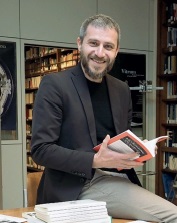
Name: Matteo Martelli
Apollonius of Tyana’s Hermetic Astral Doctrine in the Syriac Tradition
Abstract:
Astral anthropology, medicine, astronomy, and astrology converge in an eclectic Hermetic treatise associated with the Apollonius of Tyana tradition and preserved in both Syriac and Arabic. Since the pioneering studies of Giorgio Levi della Vida, who edited the text under the title “Doctrine and Twelve Commandments of Stomathalassa”, the work has received little scholarly attention, despite its value as an important witness to the reception of Hermetic teachings in the Syriac-speaking communities of Mesopotamia. My paper will focus on the two final chapters (or “commandments”), which present cosmological and astronomical doctrines and simultaneously incorporate elements of divination. The treatise will be contextualized within the wider medical, astrological, and encyclopaedic Syriac tradition and examined in light of Late Antique and Byzantine portrayals of Apollonius as an expert in astrology and talismanic arts, with particular attention to elements of continuity and discontinuity.

Name: Razieh S. Mousavi
From Semiotics to Prognostics: Astral Knowledge in Ibn Duraid’s Book of Rain
Abstract:
This paper examines the crossroads of cosmological frameworks, from semiotic codes to prognostic reasoning, in the Book of Rain (Kitāb al-Maṭar) by Ibn Duraid (c. 837–933). Situating the work within early Islamic scholarly engagements with meteorology, astrology, and natural observation, informed by both translated and locally inherited bodies of knowledge, it explores how celestial phenomena are read as meaningful indicators of terrestrial events, particularly rainfall. Ibn Duraid’s treatment of astral signs is grounded in empirical observation and poetic tradition as forms of indigenous knowledge, while also incorporating scientific elements drawn from other disciplines. Through close analysis of key passages, this paper shows how semiotic interpretation underpins prognostic practices, enabling the inference of future events from present signs. It seeks to contribute to current discussions on prognostication, natural knowledge, and sign theory in the pre-modern Islamic tradition, highlighting the interplay between observation, meaning, and prediction.

Name: Petra G. Schmidl
Prognostic Handbooks
Abstract:
Texts on prognostics readily cross boundaries of language, culture, or religion, shown
clearly by introductory astrological works such as Abū Maˁshar’s Kitāb al-Mudkhal al-kabīr fī aḥkām al-nujūm (Liber Introductorii maioris ad scientia iudiciorum). Other practices also travelled as attested, e.g., by Greek and Arabic palmomantic texts interpreting spontaneous convulsions of body parts or Arabic and Latin omen texts listing unexpected incidents to construe. Comparative study, however, remains hindered by these very, also disciplinary, boundaries and the lack of reliable editions and annotated translations.
To address this, the MOSAIC team (“Mapping Occult Sciences Across Islamicate Cultures”) at the Friedrich-Alexander-Universität Erlangen-Nürnberg (FAU) is searching for a pre-modern prognostic handbook written in Arabic to edit, translate, and analyse. Ideally, it gathers many prognostic practices using of varying signs in a systematic way, e.g., throwing dice or sighting a meteor. This talk outlines the characteristics of such an ideal text and presents leading candidates.

Name: Dominique Sirgy
Mind Over Matter: Theorizing Mind Control in the First Safavid Century
Abstract:
This presentation examines the theorization of the estimative faculty (vahm) as a mental tool for manipulating celestial and terrestrial forces in sixteenth-century, Arabic and Persian sources. Previous scholarship, including Michael Noble’s study of the central role of the vahm in Fakhr al-Dīn al-Rāzī’s (d. 1210) handbook of theoretical and practical magic, Sirr al-maktūm, and Eva Orthmann’s discussions surrounding the confluence between Sufism and letter magic, serve as the foundation for my analysis. I focus on Husayn ʿAqīlī Rustamdārī’s (fl. 16th century)’s utilization of Rāzī’s theory of vahm to explain the experimental, experiential effectiveness of the occult sciences (‘ulūm-i gharīb) in his encyclopedia Riyāż al-abrār and, in order to render a broader picture of theories of vahm and its socially relevant contexts, I will also consider sources that were produced or popularly copied in this period.

Name: Laura Tribuzio
Heavenly Signs and Intermediary Beings in the Persian Reception of the Brethren of Purity. Reading the Būstān al-ʿUqūl and the Mujmal al-ḥikma
Abstract:
This paper examines how two Persian works associated with the Brethren of Purity (Ikhwān al-Ṣafāʾ)— the Būstān al-ʿUqūl (713/1313) and the Mujmal al-ḥikma (13th c.)—engage with heavenly signs and intermediary beings. The Mujmal, particularly in the Ilāhiyyāt (Divine Sciences), chapter 8, offers a concise account of planetary spirits: agents linked to Saturn and Mars may act harmfully, while those associated with Jupiter and Venus are described as beneficent; figures such as Jibrīl and Isrāfīl are situated within this astral hierarchy.
The Būstān al-ʿUqūl approaches related themes through narrative. Chapter 12 stages an encounter among representatives of several communities—including the Khorasanian sage and the philosopher of the jinn—who claim authority over mathematical, astronomical and esoteric knowledge. Other sections recount episodes involving Nimrod, Moses, Pharaoh and the people of Jonah, where prophetic figures interpret celestial warnings.
Together, these works point to a distinct Persian reworking of Brethren of Purity cosmology.