
Speakers
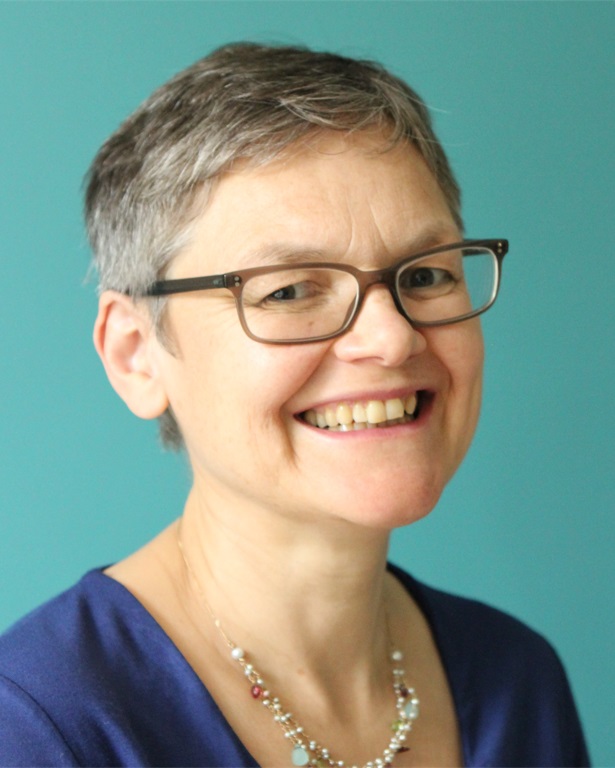
Name: Marielle Churaqui
Abstract Title: James Hillman's Views on Astrology
Abstract:
Hillman was an American psychologist and prominent follower of Jung who founded a movement based on what he termed "Archetypal Psychology". Hillman spoke of his enduring love of astrology but wrote very little explicitly about the subject. And yet, like Jung's writings, his work is peppered with astrological references. In this talk, I will present findings from my MA dissertation which researched Hillman's views on astrology.

Name: Anna Estaroth
Abstract Title: Scotland's Clava Cairns and the Midsummer Full Moon
Abstract:
Anna's research took her to the Central Highlands of Scotland, exploring the enigmatic Clava Cairns. These stone structures were built at the transition phase when metal-work transformed the British Isles from the Neolithic to the Early Bronze Age. These monuments were associated with the moon and Anna wanted to discover what that might have meant for the people who created them and for people who have inhabited this landscape ever since. She went on a riverside journey, delving into local legends, unexpected vistas and sky views to find a series of dramatic sky events which were integral to cairn locations.
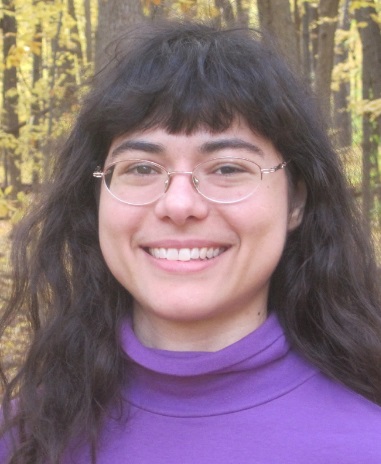
Name: Jessica Heim
Abstract Title: Satellite Constellations and the Night Sky
Abstract:
In 2019, the era of "satellite constellations" began when the first of SpaceX's Starlink satellites were launched. SpaceX is not alone: there are many satellite constellations planned by a growing number of companies and nations. Though human-made satellites have been in orbit since the launch of Sputnik in 1957, satellite constellations, or "satellite swarms," as they are referred to by some detractors, are a novel phenomenon and are increasing the number of objects in low-Earth orbit at a pace never seen before. Such constellations are meant to provide low-latency internet around the world. However, the tens of thousands of satellites planned for launch in the coming years will result in increased orbital debris and collision potential, as well as impacts on professional astronomy - effects that are already starting to be seen.
Dialogue between astronomers and satellite operators has increased in the past two years, as they have sought solutions to emerging concerns. The stakeholders with an interest in the night sky are far broader than these two constituencies however, as the sky is something experienced by all of humanity. Thus work has begun to include perspectives from diverse, and often underrepresented, communities from across the world in this conversation. This presentation will give an overview of this timely issue and will delve more deeply into concerns and possible solutions to this highly complex matter.

Name: Anya Marco
Abstract Title: Does the great stone circle at Avebury incorporate astronomical alignments?
Abstract:
Archaeoastronomical research into Avebury stone circle in Wiltshire has been limited compared with nearby Stonehenge. This talk explores whether or not the skyscape in Avebury was important during the construction and use of the henge and circle. It focuses on the two inner circles and their central features, The Cove and the Obelisk, as back sights, and is an attempt to come to a richer understanding of the largest stone circle in Britain. The existing hypotheses regarding the stone circles’ symbolic function as an axis mundi are examined, along with its link to the underworld, the idea of competition between Avebury and Stonehenge and the theory that Neolithic people were aware of and used star paths for more than just calendrical and observational purposes.

Name: Chris Mitchell
Abstract Title: Signs from Heaven or a Dark Art? How the Church embraced Arabic astrology and introduced it into the Christian West
Abstract:
Today, we're used to the three major monotheistic religions of Christianity, Islam, and Judaism being generally very critical or dismissive of astrology. Early Christianity took the same negative view of what it considered to be a "pagan" practice, but by the twelfth century, astrology was being taught in Cathedral schools and universities, and actively promoted by the clergy. This talk will examine how and why attitudes towards astrology changed, and how astrology texts from the Islamic world found their way into Western Christian Europe.

Name: Nicole Montag-Keller
Abstract Title: Concrete for Eternity - The Goetheanum building and anthroposophic cosmology
Abstract:
Using the work of Rudolf Steiner and western esoterism as a framework, this talk argues that the Goetheanum building in Dornach, Switzerland reflects anthroposophic cosmology in its art and architecture. The concepts of the skyscape,the horizonscape, the landscape and the gardenscape are discussed in relation to the building and its interior spaces: the representation of man, the red window and blue window to the South.
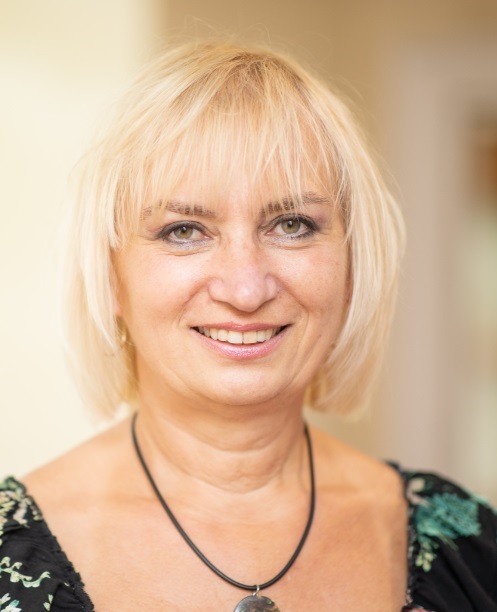
Name: Dragana Van de moortel-Ilić
Abstract Title: The cosmology of an Orthodox icon
Abstract:
Orthodox iconography is based on the idea of representing the cosmos as the essence of God's creatio ex nihilo and, serving as a visual cosmology of all being. The idea behind this is that the icons. which depict images of the archetypal world in its integrity, considered to be unachievable by limited human ability, are ontologically inseparable from this archetype. Therefore, iconography has been always related to the idea of representing the world through symbolic images. Orthodox icons might also be considered as a portrayed eschatology - a foretaste of the end of ordinary world and of reunion with the Divine, as mentioned by St. Paul the Apostle (I Cor. 13:12). Iconography, as 'theology in images', is equivalent to theology in words and it reveals the religious doctrine of Orthodoxy in its fullness. Colour plays an important role as well. Following creatio ex nihilo, layering dark to light by painting. Gold represents the radiance of Heaven; red, divine life, blue is the colour of human life, white is the Uncreated Light of God, best explained by the fourteenth century scholar Gregory Palamas.
This lecture will address the Cosmic aspects of Orthodox icons and how these were interpreted in the Patristic texts and by medieval Christians scholars. Paintings from the Late Byzantine era will be used as examples.

Name: Octavia Sheepshanks
Abstract Title: An Exploration of the 'Overview Effect' as Enchantment
Abstract:
An enchanted experience is a personal moment of wonder that can be life-changing, while the 'Overview Effect' refers to the permanent shift in perspective described by many astronauts after seeing the Earth from afar. This paper uses three key themes to explore points of resonance and conflict between the two concepts, in the hope of enriching our knowledge of both. Firstly, the Overview Effect emerges as a bridge where technology and wonder meet, which informs an understanding of the seemingly implausible 'virtual reality' Overview Effect. Next, the theme of ‘space and place’ is discussed in light of the intense feeling astronauts have of the Earth as ‘home’. Lastly, this paper places the Overview Effect in the historical tradition of landscape-viewing and asks how the cultural and social identity of an Earth-gazer might affect their experience.


