
Speakers

Name: Danielle Alexander
Abstract Title: Unearthed: A Multidisciplinary Exploration of the Romano-Celtic Temple on Hayling Island
Abstract:
The Romano-Celtic temple on Hayling Island was a key locale in the Roman conquest of Britain. Despite this, little is known about the rites or experiences of the people who used it in the past aside from being a place of pilgrimage and depositional practice. Today, the site is buried beneath active farmland frequently trawled by a small community of licensed metal detectorists. In this talk, I will discuss how their experiences have shed light on the experiences and emotions of those who used the site in the past, such as connecting with cultures and history, engaging in communal and ritualised praxis, interacting with nature and the weather-world, and reminiscing about family and community. Although it is not possible to determine exact equivocations between the past and present due to vast temporal, cultural and socio-political differences, recognising these similarities could enliven the archaeological record and enrich understanding of past experiences. Particularly, I will focus on the emotions that arise during their visits and show that there is justified space for the study of experience and emotion in archaeology.

Name: Laura Andrikopoulos
Abstract Title: Wordsworth's Use of Lunar Symbolism
Abstract:
In this talk I argue that lunar symbolism was crucial to William Wordsworth's (1770-1850) radical turn in poetry during the long eighteenth century. Wordsworth's poetic innovation took place against a background of rapid change in the relationship between poetry and science. This talk explores this innovation, focusing on his portrayal of the moon in his 1805 version of The Prelude.
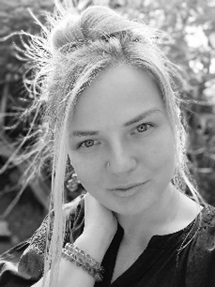
Name: Sintija Barakat
Abstract Title: The Ancient Latvian Solar Calendar’s system in the contemporary world: Cultural cosmology or the lost knowledge of folklore?
Abstract:
Baltic folklore, mythology, and the Indo-European Proto-language are directly linked: Baltic mythology draws on folklore's timeless and ancient traditions, serving as one of its primary sources (Bojtár, 1999). Word of mouth from generation to generation has preserved ancient knowledge through Latvian folklore, which today has mainly taken a written form. Considering that Latvian Folk songs, also known as Dainas, are not only mythical but also rich in astronomical knowledge, as Dainas contain ancient Baltic astronomical wisdom in the time reckoning system. Therefore, the ancient Latvian solar calendar’s system will be considered a part of the Dainas.
Frequently mentioning Dainas in this talk will highlight the Latvian Solar calendar’s place in Latvian culture and people’s cosmological beliefs. This talk will mainly present Šegan-Radonjić and Šegan's (2020) ideas of the calendar as the absent element that bridges the gap between culture and the cosmos, building upon the concepts of the importance of a group’s cosmology, worldview, beliefs, religion, and values in the culture proposed by Gumerman and Warburton, (2005).

Name: Dan Broadbent
Abstract Title: Beneath the Wide Wide Heaven: The Dark Green Religion of Wordsworth and Coleridge
Abstract:
At the end of the eighteenth century, just as they were embarking on their literary careers, the poets Samuel Taylor Coleridge and William Wordsworth spent a twelve-month period of intense collaboration in South West England’s Quantock Hills. The fruits of this collaboration comprise poems which, on the surface at least, display a deeply spiritual reverence for the natural world.
This presentation explores the relationship between these poems and contemporary spiritual and religious approaches to addressing climate crisis and environmental emergency. Specifically, it asks whether these early works, and the spiritual beliefs they express, can rightly be understood as early examples of Dark Green Religion, Bron Taylor’s concept which explored a wide range of practices which consider ‘nature to be sacred, imbued by intrinsic value, and worthy of reverent care’.

Name: Berna Lee
Abstract Title: The Living Tradition of Chinese Astrology in the Contemporary World
Abstract:
In China, patterns in the sky are seen to reflect all forms on earth, encompassing human affairs and fate or ming yun命運. The I Ching articulates the relationship between the patterns in the sky (xiang 象) and the interactions with the earth and humans as shapes (xing 形). These interactions suggest a natural order that underpins the Chinese cosmological view, highlighting a cultural continuity in contemporary Chinese astrology.
Traditionally, Chinese astrology has functioned as a means for individuals to navigate ming yun, facilitating the discovery of their fullest potential and alignment within the natural order. While ming yun emphasizes human responsibility and indicates an extent of free will, contemporary Chinese astrologers present a diverse array of perspectives—ranging from deterministic to different extents of free will—shaped by their unique cultural influences and experiences.
This study investigates how the background and worldviews of contemporary astrologers influence their approaches to their work and their attitudes toward fate. Throughout history, astrological traditions have survived and revived, and contemporary astrologers continuously reorienting and redefining their worldviews in response to the everchanging cultural and historical processes. This research delves into the experiences of the astrologers, revealing astrology as a living tradition that not only expresses nature but also evolves with personal and social dynamics.

Name: Alejo Lopez
Abstract Title: Exploring Gender Constructs in Astrological Practice through the Role of the Sun and Moon
Abstract:
An exploration into the intersection of astrology and gender challenges traditional binaries, focusing on the interpretation of the Sun and Moon, traditionally seen as masculine and feminine. The session examines how these interpretations resonate with or diverge from contemporary understandings of gender. Insights from interviews with practising astrologers, alongside a thorough review of astrological literature, reveal the varied ways gender is conceptualised in modern astrology. This discussion offers a deeper understanding of how astrological symbols can either uphold or reimagine gender norms, providing a fresh perspective on the evolving practice of astrology in a rapidly changing world.

Name: Maria Margarida Manarte
Abstract Title: An investigation into the astrological symbols present in two decorative paintings of José de Almada Negreiros (1893 – 1970)
Abstract:
This research examines the astrological symbols used in two mural paintings by the twentieth century Portuguese artist José Sobral de Almada Negreiros (1893–1970), known as Almada. One painting, Planisfério, represents a world map surrounded by the four elements and the twelve zodiac signs, while the second, the Hours’ Cycle, represents the stages of producing a newspaper in twenty-four hours of a day. Almada’s interest in astrology is shown in his paintings as well as in some of his writings. However, although Almada is a widely studied artist this particular subject in his art was less explored. Considering the paintings’ size and visibility, the relevance the artist gave to the astrological symbols is worth noting as it can be thought that they should have impacted the Portuguese society. Possibly Almada wanted to make astrology visible returning to people the ancient knowledge he considered lost and was seeking for, as his studies went deeper pursuing the ancient knowledge of Greek philosophy and culture. This investigation also contributed to develop an understanding of the presence of astrology in Portugal in the 1930s and 1940s.

Name: Izabela Podlaska-Konkel
Abstract Title: Astrology of dream divination spells in the Greek Magical Papyri
Abstract:
A collection of texts known as the Greek Magical Papyri has survived from ancient Egypt and other places in the Mediterranean region. It contains striking astronomical and astrological elements, especially in the dream divination spells associated with astrological and divination practices in the Hellenistic world (including incubation in sanctuaries and religious rites). Astrology, understood as divine knowledge in the training of ancient Egyptian temple priests, was used not only to reinforce the authority of those who performed the spells, but also to choose the most auspicious time to perform a ritual in accordance with the heavens. In addition, the astrology and astronomy of dream divination spells enriched the magician's practice and enabled him to connect with the cosmos and the divine world. The aim of this paper is to examine the relationship between astrology and the Greek alphabet by analysing the relevant archaeological material and the testimonies in the Greek astrological texts that assign the letters of the Greek alphabet to the planets and the zodiacal signs. It also examines how the tradition of assigning numbers, musical sounds, constellations and planets to the Greek letters was reflected in the practice of dream divination spells as one of the forms of communication with the gods in ritual speech.


