Speakers

Name: Ashraf Akhmedov
Ulugbek and his Astronomical 'Zij'
Abstract:
The main scientific work of Ulugbek is considered to be "Ziji Jadidi Guragani" or "New Guragan Astronomical Tables". The author completed this work in 1444 after thirty years of painstaking work and astronomical observations. This astronomical reference book, which was soon translated into Latin, along with the Almagest by Claudius Ptolemy and the astronomical tables of the Castilian king Alphonse XV, became a guide to astronomy in all observatories in Europe.
The accuracy of these tables surpassed everything previously achieved in the East and Europe. Only in the XVII century, Tycho Brahe managed to reach an accuracy comparable to Samarkand observations, and then surpass it. It is not surprising that Ulugbek “Zij” constantly attracted the attention of astronomers, both in the East and in Europe.
In this lecture, the translator of Ulugbek “Zij” into Russian and Uzbek languages Prof. Ashraf Akhmedov will talk about the content and structure of the treatise and will analyze its sources and influences.

Name: Steven Vanden Broecke
Historicizing agency and politics in astrology. The cases of Conrad Heingarter (before 1440-after 1504) and Girolamo Cardano (1501-1576)
Abstract:
How did celestial phenomena encourage people to participate in the historical process and political events? For several reasons, the central question of this conference is both stimulating and tricky. First, it could encourage adoption of the old ‘cunning of reason’-interpretation of astrology (i.e., an error with beneficial downstream effects) and its relation to history. Second, it raises the question what past actors understood by ‘participation’ and, more broadly, human agency? What was understood by ‘the historical process’? Which practices count as ‘political’? Have such concepts always been defined in the same way? Third, what do we make of the early modern European phenomenon that political rule increasingly set itself up as a privileged gatekeeper between heaven and earth, at the expense of Christendom or, indeed, astrology? Did political events also encourage people to participate in the historical process by disregarding celestial phenomena, as Patrick Curry argued more than thirty years ago?
In this lecture, I would like to focus on the second issue (so as to circumvent the first and open up a vista towards the third). Many historians convincingly argued that in fifteenth-century Europe, the science of the stars was at the heart of a new alliance between power and natural knowledge, set against the background of an emerging information economy. But what were the premises of this fateful alliance? Specific anthropologies, notions of astral influx and human agency, definitions of political government jointly determined the very meaning of astrological practice and the pursuit of ‘government’. Did astrology adapt to changing conceptions of history and politics, or should we indeed approach it as a premodern ‘error’ that was increasingly overtaken by a modernizing world?
These are some of the questions that will be addressed by comparing what are arguably the two most well-documented astrological practitioners of fifteenth- and sixteenth-century Europe: Conrad Heingarter (before 1440-after 1504) and Girolamo Cardano (1501-1576).

Name: Nick Campion
Harmony, Horoscopes and History
Abstract:
A dominant model of the universe in Medieval Europe the classical concept of Harmony, in which every single thing is tied together through a series of interconnections we could today described as entangled. This lecture examines specific examples of the application of Harmony in medieval astronomy. The use of astronomy (or astrology as we would now call it) in medieval European politics spanned the entire range of possibilities from the whole life of the universe to hour-by-hour considerations on when to attack a castle. This lecture will look at practical examples of horoscopes cast on behalf of the Emperor Frederick II (1194-1250), to investigate the future of Richard II of England (1367-1400) and by the famous astrologer Guido Bonatti (1210-1296/1300). I will consider the claim by Marcia L. Colish that 'medieval logicians and theologians had made widely thinkable the concept of possible worlds, different from ours, and had made rigorous thinking about counterfactuals possible' (Medieval Foundations of the Western Intellectual Tradition (New aven and London: Yale University Press, 1998). p. 324). What was the 'possible world' that astrology proposed? This lecture concludes that the possible world was the Harmonious one.

Name: Karine Dilanian
Great conjunctions of Jupiter and Saturn, eschatology of Moscow as the Third Rome and Ivan the Terrible political propaganda
Abstract:
Jupiter-Saturn conjunctions were actively discussed in Europe at the beginning of the XVI century due to the catastrophic prediction for February, 1524, which was made by the German astrologers Johannes Stöffler (1452–1531) and Jakob Pflaum (c. 1450–1500). The authors mentioned in their Almanach nova published in 1499 in Ulm that the Earth at this time was to pass through 'indubitable mutation, variation and alteration such as we have scarce perceived for many centuries', because of a great conjunction of the planets in Pisces. This eschatological prediction, transmitted into Muscovite Russia by the German chief physician to Vasyli III (1479–1533) and astrologer Nicolaus Bülow (fl . 1490–1533), raised a heated debate within a Russian society which, like concentric circles, stimulated wide range of questions with the center that was the astrological prediction of the new Flood in 1524. One of such 'concentric circles' was an idea of Moscow as the Third Rome, which was formulated, logically completed and fully reasoned within a debate against astrological 1524 predictions initiated by a monk from the Pskov-Yelizarov Monastery, named Filofei.
In the new ideology of the Tsardom the central figure of the Tsar was of great importance. During this period, Maxim the Greek (1475-1556) formulated the three main virtues of the Tsar that are necessary to rule the Orthodox terrestrial tsardom. They were 'justice and truth', 'chastity and purity' and 'mildness' expressed through 'righteous anger', which rule the tsar's life and animate his image as the Heavenly Tsar. All official Muscovite culture was oriented on the sacred and defined by ritual and myth, which expressed a system of analogies between archetypes of Christ, the king and the state. She considers Ivan IV Grozny created his personal mythology to legitimate the Tsar's power. This mythology, derived from a system of symbols and their analogies, included several concepts, united into pairs of opposites such as Severity-Meekness, Justice-Chastity and Wisdom-Word, thus repeating Maxim the Greek's list of virtues.
The historical document named "Bol'shaya chelobitnaya", or "Large petition" written, as considered, in 1549 by Ivan Semenovich Peresvetov (born in 16 c.), contains two compositions named "The first prediction of philosophers and doctors" and "The second prediction of philosophers and doctors". These writing are presumably based on the astrological birth data of Ivan IV and describe all the doctrines formulated by Maxim the Greek as the general virtues of the tsar. Several scholars consider Ivan IV Grozny, not Peresvetov, as the author of these compositions. The study aims to prove that Peresvetov's writings were the part of Tsar Ivan IV Grozny personal mythology that utilized astrology as propaganda of his providential mission, which, as he considered, was provided by the celestial signs.
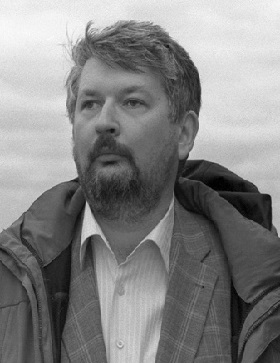
Name: Vladimir V. Emelianov
The Epic of Gilgamesh and the Cultic Calendar
Abstract:
Soon after George Smith first published the epic of Izdubar, H.C. Rawlinson put forward an original hypothesis. According to Rawlinson, each of the twelve tablets of the epic describes the ritual of a particular month, and this ritual was associated with the Sun’s path during an astronomic year. In 1872, this hypothesis was published in a popular magazine Athaeneum. Rawlinson's hypothesis was picked up and supplemented by A. Sayсе, F. Lenormant and P. Haupt. It was also actively quoted by the Pan-Babylonians. However, after the First World War, it was practically forgotten. Now we have many additional arguments in favor of it. In my paper, I will present the results previously presented in my books and some articles.
In the Early Dynastic period the Sumerian Bilgames cult was connected with the important autumnal festival of Bau. In Nippur, during the Ur III period, Bilgames was seen as a hero of the 5th month and sporting games. Much later, in the Neo-Assyrian version of this Akkadian epic, all 12 months of the Nippur-Babylonian year and calendar belonged to Gilgamesh. Gilgamesh thus became a man-year. In the Epic of Gilgamesh we see the calendar being anthropomorphised and this crucial phenomenon was connected with the great scholar Nabû-zuqup-kēnu. Even earlier, this scholar divided the human body into 12 parts in the physiognomic treatise Alamdimmu. Now we have at least one strong argument supporting Rawlinson's hypothesis (Gilgamesh and Zodiac), and it will be presented in my paper. Additionally, one can point out parallels between the 12 tablets of the Akkadian Epic of Gilgamesh and the 12 phases of the life of Buddha. This construct of life, consisting of 12 parts, is an idea which originated from the Axial Age.
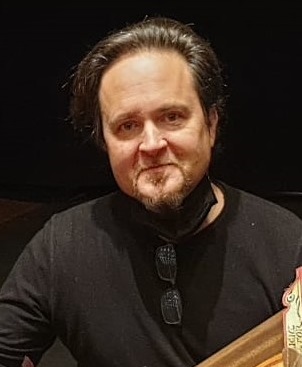
Name: Giangiacomo Gandolfi
Legitimized by the Stars: Astrological Secrets of the Medici from Cosimo the Elder to Ferdinando I
Abstract:
I propose a reassessment of the Medicean propaganda based on astrological theories in the XV-XVI century, reconsidering and extending the classical analysis of Claudia Rousseau and Janet Cox-Rearick. I will show how the Florentine dynasty based its foundation myth on the evangelical pericope of Matthew about the Magi and particularly on the first sighting of the Star of Bethlehem, fashioning an esoteric, technical and complex magusean narrative befitting for the humanistic age. Such a narrative was born during the extraordinary years of the Council of Florence, an event of immense symbolic relevance for medieval culture and strongly supported and financed by Cosimo the Elder that positioned the Tuscan town at the forefront of the international scene. Traces of this sacred and political legitimization from the stars and from the bible still emerge in the famous celestial vault in the Old Sacristy of San Lorenzo, in the creation and leadership of a large city confraternity dedicated to the Magi, in the annual hierophany of Santa Maria delle Carceri in Prato and in the careful timing of many crucial dynastic events until the end of the XVIth century. However, the crisis of succession after the extinction of Cosimo’s branch of the family in 1519 and the renovation of politics in the late Renaissance caused the introduction of another concurrent astrological narrative of empowerment, based on the Veltro Prophecy by Dante as read by Cristoforo Landino and on Conjunctionist Astrology. This new myth – probably conceived by Leo X, as may be inferred from the decoration in the Villa of Poggio a Caiano – was refined by Cosimo I, perfectly complementing the obsessive Augustan astrological references in his heraldry. The iconographic symbol of this narrative is the zodiacal couple Scorpio-Libra, to be found in an engraving by Marcantonio Raimondi (probably realized for Leo X) and in a famous relief on the façade of Villa Medici in Rome. Here the simultaneous representation of the 1585 comet in Cetus hitherto unnoticed reinforces the prophetic value and finally promises to Cardinal Ferdinando the guide of the Tuscan state.

Name: Darin Hayton
Conrad Tockler’s Astrological Aphorisms
Abstract:
Conrad Tockler was a master at the University of Leipzig at the beginning of the sixteenth century. Like many astrologers at the time, he regularly produced yearly prognostications in both Latin and German, and had printed various astrological texts that he lectured on at the university. In addition to these, Tockler dedicated a number of astrological texts to George the Bearded, the Duke of Saxony. These texts were never printed but survive in fine manuscripts. Among them is a collection of 130 astrological aphorisms, which includes a long dedication to the Duke that provides a taxonomy of licit and illicit divinatory practices as well a justification for astrology. In form and style, Tockler’s aphorisms resemble the ps-Ptolemaic Centiloquium, the collection of 100 aphorisms attributed to Ptolemy that was widely copied and printed, and studied universities across Europe. Yet Tockler seems not to have relied on Ptolemy’s list, choosing instead to compile his own collection of aphorisms. I will use Tockler‘s aphorisms to reveal his intellectual and textual debts to other astrologers and texts, to recover his astrological practice, and to locate that practice in the space between the University of Leipzig and the Saxon court in Dresden.

Name: R. Hakan Kırkoğlu
The Sultan and his astrologer: The practice of astrology in the Ottoman court during the eighteenth century
Abstract:
In the early modern mind, the intersection and mutual relationship between the natural sciences and astrology as well as alchemy and the occult created a lively intellectual ground, a boiling cauldron of ideas among scholars, scientists, and philosophers. In the eyes of Islamic religious scholars, astrology was not rejected but seen as harmful and at the edge of blasphemy. However, some members of the Ottoman learned elite, with their eclectic range of interests, showed considerable enthusiasm and attachment to the astrology and produced calendars and horoscopes for various ends in their relationship with the ruling elite. The practice of astrology (Ilm-i Nücum) was already institutionally established in the Ottoman court in the seventeenth century. The astrologers (muneccims) as members of the court and sometimes having a companion status in relation to the sultans, depending on the trust they cultivated, could be seen silent advisors behind the scene.
The astrologers were expected to make different types of calendars, yearly reports of judgments, and find auspicious times for special events like setting the first stone in a mosque’s groundwork, the ceremony of accession to the throne or commencing military campaigns. My MA thesis (2016) specifically focuses on one of the longest-serving court astrologer Fethiyeli Halil Efendi (1699-1773) who was also a member of the Ottoman learned establishment. How he secured a special position during the reign of Sultan Mustafa the III (1757-1774) and what were the main components of his yearly predictions to the Sultan ? We also find that he had penned a special note to the Sultan in regard to Jupiter-Saturn conjunction in Aries which occurred in 1762. In this lecture, I am going to dwell on the astrologer’s yearly predictions as well as concurrent developments in the Ottoman court life.

Name: Ulla Koch
Jupiter and the Assyrian King
Abstract:
Astrology was an integral part of decision making at the Neo Assyrian court. The king had groups of observers posted around his realm, who would report to him what they saw, especially concerning the phases of the moon, but also other significant celestial events should they notice them. The moon played a central role in Mesopotamian astrology but the planets were not neglected. However, observation of the planets is more difficult to perform accurately and demands a thourough knowledge of the map of the sky. Most of the constellations we know and use today were defined by the Mesopotamian astrologers. The king had highly trained scholars at his court, who was in daily contact with him and helped him understand the significance of the movements of the celestial bodies. Almost all the celestial bodies were at the same time divinities in their own right and representations of the various gods of the Mesopotamian pantheon. Of special importance to the king was the planet Jupiter. As the celestial incarnation of the supreme god Marduk, Jupiter’s movements often were interpretated as pertaining to the king and his reign. In the Neo Assyrian period (ca. 900 – 600 BCE) celestial bodies, including the planets, were often mentioned in religious/magical texts alongside, or in lieu of, the gods they represented. They could also appear in political texts, such as treaties and royal inscriptions. Here I will investigate when and in which contexts the planet Jupiter is mentioned and how its special relationship to the king and kingship is reflected in the sources and what other symbolism was associated with the planet.

Name: Oleg Lushnikov
The contribution of Eastern scholars of the VIII-XV centuries to the development of the science of the stars
Abstract:
The VII-XV centuries can be called the era of great achievements in astronomy and astrology. It was a time of preserving the ancient knowledge of the scholars of Babylon, Ancient Persia, India, Egypt, Greece and Rome. Translations of their works into Arabic, Persian, and Turkic languages, further development of their ideas and new discoveries.
However, the great successes of the geniuses of astrological science would not have been possible without large-scale investments on the part of the rulers of the big powers of that time. Among those, Arab-Persian caliphs, Turkic sultans and Mongol khans can be distinguished in the Near and Middle East. The imperial capitals and major trade centers of the Eurasian powers (Baghdad, Damascus, Cairo, Isfahan, Tabriz, Maraga, Karakorum, Hanbalyk, Samarkand, Bukhara, Balasagun, Urgench, Sultania, Sarai, Bulgar, Old Crimea, etc.) became regions of intertwining cultures and the development of sciences. The construction of observatories, scientific centers, the collection of libraries, the maintenance of hundreds of scientists, have always been within the power of mighty monarchs.
The result of these efforts was the development of such sections of astronomy and astrology as accurate ephemerides of planets, calendars, coordinates of the stars, cycles of distant planets, interactions of Jupiter and Saturn, mundane astrology and astrogeography, astrometeorology and different branches of astrology, Earth and sky globes, and many others. All of this is the merit of astrologers of the Middle Ages East.
The discoveries of the scientific schools of the Baghdad Caliphate (Nawbakht, Mashallah, Kanaka, Ibn Hayyan, Al-Khorezmi, Ar-Razi, Al-Kindi, Abu-Mashar, Al-Farabi), the Karakhanid, Ghaznavid and Seljuk powers (Key-Kavus, Al-Biruni, Ibn Sina, Omar Khayyam, Al-Farabi - Asturlabi, Ibn Funduk, Yusuf Balasaguni), the Great Mongol Empire (Khoja Nasreddin At-Tusi, Mahmud Al-Shirazi, Jamal al-Din al Bukhari, Al-Ordi, Masudi al-Bulgari, Kamal al-Din at-Turkmani, Muhammad Taragai Ulugbek) influenced the development of astrology in the New time, both in the East and West. The successes of European science would not have been possible without the fundamental discoveries of astrologers of the East. As a recognition of the contribution to the development of the whole world, a monument was unveiled at the UN in 2009 to the astrologers of the East.
The report will examine the achievements of medieval astronomers and astrologers of the East during the period of three great empires – the Baghdad Caliphate, the Seljuk Sultanate and the Great Mongol Empire.

Name: Ruben Nazaryan
Along The Trails of The Legendary Timurid Library
Abstract:
Abstract: Libraries in the old days were called a repository of wisdom, a haven of thought, but as if some kind of mystical predestination accompanied the fate of the great libraries of antiquity: some were irretrievably destroyed, while others were hidden so skillfully that they cannot be found to this day. The same fate befell the legendary library of Ulugbek.
The beginning of this book collection was laid during the reign of the outstanding medieval commander Amir Timur, when in 1402 his troops captured and subjected to the most severe defeat and plunder the ancient city of Pergamum in the west of Asia Minor. Pergamum was once the capital of the Hellenistic Kingdom of Pergamon, which flourished in 263-159 BC.
Pergamum was considered the third largest city in the ancient world (after Rome and Alexandria). He became notable, first of all, for his magnificent architecture and the famous library, which competed on an equal footing with the Alexandrian one, the museum of sculpture, scientific schools and the largest center of theatrical art.
In addition, Pergamum glorified itself with the invention of parchment, which accelerated the development of education, sciences and arts, and became a prerequisite for the creation of huge libraries. Then the Romans became the masters of Pergamon, who, after the collapse of the Roman Empire, were replaced on the throne by the Byzantines. in 713 this wonderful city of Asia Minor was destroyed by the Arabs. Thus, Pergamum, which, according to the historian Pliny the Elder, was the "teacher of Rome", went into oblivion forever, opening its new, Muslim, history.
Since 1330, the territory of Pergamum passed from the Arabs to the Turks. Seven decades later, the Turks were replaced on the throne by the Central Asian ruler Amir Timur. It was then that the Samarkand conqueror discovered the remains of the once richest library.
The looted treasures of Pergamum, among which were the oldest manuscripts, were sent by caravan to Samarkand. In addition, Timur, in the process of his conquest, plundered the libraries and other cities of the mentioned region, significantly replenishing the original collection ...
After the death of Amir Timur, the library was inherited by his grandson, astronomer and ruler of Samarkand Ulugbek. During his reign, Timur's library was significantly replenished: manuscripts were bought in various cities of the East and copied in the court workshop. It is believed that Ulugbek was personally the chief librarian. The heir who ruled the territory bequeathed to him for forty years, according to the existing legend, was killed in October 1449 by order of his son Abdulatif. After the death of Ulugbek, according to one version, the books were taken by an associate of the great astrologer Ali-Kushchi to one of the Afghan provinces, according to another, they were buried in one of the dungeons of Samarkand. There were other versions. The report will consider various versions of the fate of Ulugbek's library, as well as the history of its search up to the present day.

Name: David W. Pankenier
Medieval Chinese Planetary Astrology
Abstract:
Portentous clusters of the five visible planets are repeatedly implicated in historical sources in connection with dynastic transitions in ancient China. The History of the Three Kingdoms, an account of the 3rd cemtury CE struggle for supremacy among three contending kingdoms — Wei, Wu, Shu — records how timely planetary portents during the final years of the Later Han dynasty (184–220 CE) were exploited as the celestial signs sanctioning usurpation of Han by the Wei dynasty. Half a millennium later, in mid-Tang dynasty (618–907), the impetus for the devastating rebellion that nearly brought down the Tang can be shown to have been strongly influenced by both the historical precedents, and more immediately, by a conjunction of all five visible planets that occurred in 750 CE. During the same long period there was sustained and close contact between China and the Sassanian Empire (224-651) whose aristocracy largely sought refuge at the Chinese court when the Empire fell to the Arabs in 651. Twenty-year conjunctions between Jupiter and Saturn played an important role in the founding of the Sassanian Empire in 224 and in political astrology, so the talk will also comment on the potential for cross-cultural influences between China and Persia.
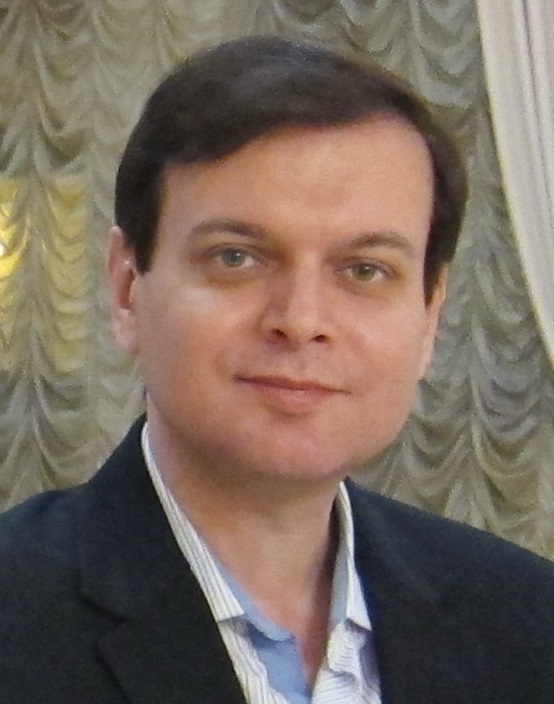
Name: Eugeny Pchelov
Heraldic astronomy: dedications to monarchs on maps of the stellar sky
Abstract:
The report will discribe the history of constellations that were created by astronomers in honor of their patrons - European monarchs. Most of them were figures of dynastic or personal coats of arms. This tradition was characteristic of the era of European absolutism, since the middle of XVII century until late XVIII century. New constellations of this type appeared on the star maps and celestial globes, and there were attempts to realization a total symbolic reform of all complex constellations. With the new constellations, astronomers not only expressed their feelings of loyal subjects, but also sought to capture happy events or omens. This tendency was especially clear in the topography of the new constellations, which was not accidental. The political symbolism of sky was thus embodied in the heraldic, symbolic, and topographical aspects.

Name: Micah T. Ross
Persian Skies over China
Abstract:
In his edition of the Arabic text of Dorotheus, Pingree (1976) presented the text as evidence for the translation program of Šāpūr I (c. 240-270). At the Eighth European Conference of Iranian Studies in St. Petersburg (2015), Cottrell and Ross (2019) challenged the relationship of the Arabic text to a Middle Persian original of the third century. Recent studies by Mak (2014) and Kotyk (2017, 2018) have identified elements of Western astrology in China by about 785. These scholars have asked what path might these elements have taken to China, if not through a second century Persian translation.
In his edition of the Arabic text of Dorotheus, Pingree (1976) presented the text as evidence for the translation program of Šāpūr I (c. 240-270). At the Eighth European Conference of Iranian Studies in St. Petersburg (2015), Cottrell and Ross (2019) challenged the relationship of the Arabic text to a Middle Persian original of the third century. Recent studies by Mak (2014) and Kotyk (2017, 2018) have identified elements of Western astrology in China by about 785. These scholars have asked what path might these elements have taken to China, if not through a second century Persian translation.
On the other hand, Theophilus of Edessa (695-785) may have described such a tradition when he mentioned a Persian paraphrase of the works of Critodemus, Valens, Dorotheus, Timarchus, and “the others associated with them.” The date and title of this paraphrase are not recorded by Theophilus. Nor can the resemblance of this work to the surviving text of Dorotheus be established. However, a seventh or eighth century Persian text may have been more accessible to Chinese astrologers than a third-century translation. Despite this description, Persian is not the only possible vehicular language of Western astrology. Theophilus, like Mashallah (740-815), knew Syriac, which may also constitute a lost tradition.

Name: H. Darrel Rutkin
Astrology and the Age of Aquarius: Great Conjunctions (Then and Now), Divine Providence and the Unfolding Transformations of Human History
Abstract:
As a student of the history of astrology, one of the most fascinating topics to me is how people have tried to understand their places—individually and collectively—in the arc of human history. From Sasanian Persia to the present day, the Great Conjunctions of the outer planets—through the 17th century, of Jupiter and Saturn, in their strikingly triangular patterns, sure proof of God’s providential creation to Kepler; now of Uranus, Neptune and Pluto, discovered in 1781, 1846 and 1930 respectively—have been seen as cosmic harbingers of New Ages in politics, religion and culture. Saturn and Jupiter’s upcoming conjunction in Aquarius (and the recent and recurring one of Saturn with Pluto in Capricorn) will surely prompt reflections on the role of Great Conjunctions in human history.
In this talk, I would like to focus on an authoritative analysis in the Middle Ages, by Thomas Aquinas and Albertus Magnus, that attempted to understand the broader patterns of human history as the unfolding of divine providence. Although it is not well known, Thomas used astrology to articulate his understanding of divine providence in one of his most influential texts, the Summa contra gentiles, which he wrote in the 1260s, in part relying on his teacher, Albertus Magnus’s, causal analysis of how astrology works in the world and on people. This doctrine provided one of astrology’s theological foundations in the medieval map of knowledge, which continued to be authoritative into the 17th century and beyond. In exploring Thomas’s and Albert’s influential analysis, we will be able to more fully understand some of the most interesting and influential precursors to both modern and early modern views on the significance of Great Conjunctions in history.

Name: Liana Saif
The Pseudo-Aristotelian Hermetica’s Astrological Cycles: Sources and Influences
Abstract:
The Pseudo-Aristotelian Hermetica (the PsAH) constitute a ninth-century Arabic corpus of treatises that take the form of conversations between Aristotle and Alexander the Great. The philosopher describes to his royal pupil the genesis of the universe and the microcosm (the first human) and instructs him on astrology and astral magic. In my presentation, I will focus on the role of astrological cycles in the world of the PsAH and highlight some of the religious currents that it refashions, namely the Zoroastrian within what can be called “Arabic hermeticism”. I will compare its cyclical cosmology with those found in the Ismāʿīlī “esoteric” text attributed to the tenth-century dāʿī Jaʿfar ibn Manṣūr al-Yaman, Kitāb al-Fatarāt wa al-qirānāt (‘The Book of Interim Times and Planetary Conjunctions’), showing how astrological cycles are integrated into Imami esotericism and cosmology. Similarly in Ibn al-‘Arabī’s (1165-1240) al-Futūḥāt al-makkiyyah (‘The Meccan Revolutions’) where we see evidence of the hermetic astrological cycles integrated into a Sufi and lettrist world-view.

Name: Shlomo Sela
Historical Astrology in the Rise of Medieval Hebrew Science (Abraham Bar Hiyya and Abraham Ibn Ezra)
Abstract:
The twelfth century witnessed the emergence of a new Hebrew science that conveyed the Greco-Arabic world view to Jewish civilization. In this cultural phenomenon, Jewish scholars gradually abandoned the Arabic language and adopted Hebrew as the vehicle for writing about secular and scientific ideas. One of its features was a keen interest in astrology, in general, and in historical astrology, in particular. My lecture is intended to review the contribution to historical astrology made by Abraham Bar Ḥiyya (ca. 1065–ca. 1136), the pioneer in the emergence of the new Hebrew science, and by Abraham Ibn Ezra (ca. 1089–ca. 1161), who incorporated astrological ideas into his influential biblical exegesis and created the first comprehensive corpus of Hebrew astrological textbooks that address the main systems of Arabic astrology. Bar Ḥiyya’s most significant contribution is the fifth chapter of his Megillat ha-Megalleh (Scroll of the Revealer). This chapter, an impressive astrological work in its own right, was meant to provide a Jewish and general astrological history as well as an astrological prognostication of the coming of the Messiah. Abraham Ibn Ezra's astrological corpus includes the three versions of Sefer ha-'Olam (Book of the World). These treatises represent the first Hebrew theoretical work, unique in medieval Jewish science, to discuss the theories and techniques of historical astrology that had accumulated from Antiquity to Ibn Ezra's time, on the basis of Greek, Hindu, Persian, and Arabic sources.

Name: Octavia Sheepshanks
Calling for a contemporary understanding of 'Political Skies'
Abstract:
The 1967 Space Treaty, signed by 105 countries, details rules governing the peaceful exploration and deployment of outer space. In doing so, it seeks to maintain not only political harmony on earth, but ultimately political harmony in outer space itself as the sky becomes not just a conceptual mirror of life on earth, but a literal and physical place capable of playing host to political conflict. Some fifty years ago, in the wake of the 1969 moon landings, Eugene Brooks analysed the Articles of the Space treaty in the context of potential legal issues and concluded that ‘whatever problems arise in the settlement of celestial bodies will spring from conflicts of national interests, and may aggravate tensions on earth’ (The International Lawyer, 1970).
Today, the European Space Agency website directs readers to an article by the Apollo 17 astronaut Harrison Schmitt, who argues that ‘an aggressive program to mine helium-3 from the surface of the moon would represent an economically practical justification for permanent human settlements’ and provide enormous benefits for life on Earth (Popular Mechanics, 2004). A discussion of potential political conflict is omitted, yet Stephen Uhalley, Jr. has described ‘the controversy over the moon as a destination’ as 'complex and political' (American Journal of Chinese Studies, 2016). Geographer Julie Michelle Klinger has observed that our current discussion of mining the Moon is in fact a matter of the political economy of natural resources ('Chapter 6: Extraglobal Extraction', from Rare Earth Frontiers, 2017).
In the context of both national and private companies outlining their plans for space mining, this paper will argue that insufficient attention is being paid to potential geopolitical issues. The focus will be on the moon over other locations in space, but in the understanding that the conclusions are also applicable further afield. The Space Treaty will be presented in parallel to Antarctica's Madrid Protocol, from which there is arguably much to be learnt.
In this paper I will call for an updated conception of 'political skies', not only in academic contexts such as this conference, but in the global science community and worldwide political economy. A contemporary clarification of the Space Treaty, which focuses on the implications of lunar mining and which leaves no room for interpretation, needs to occur as soon as possible.
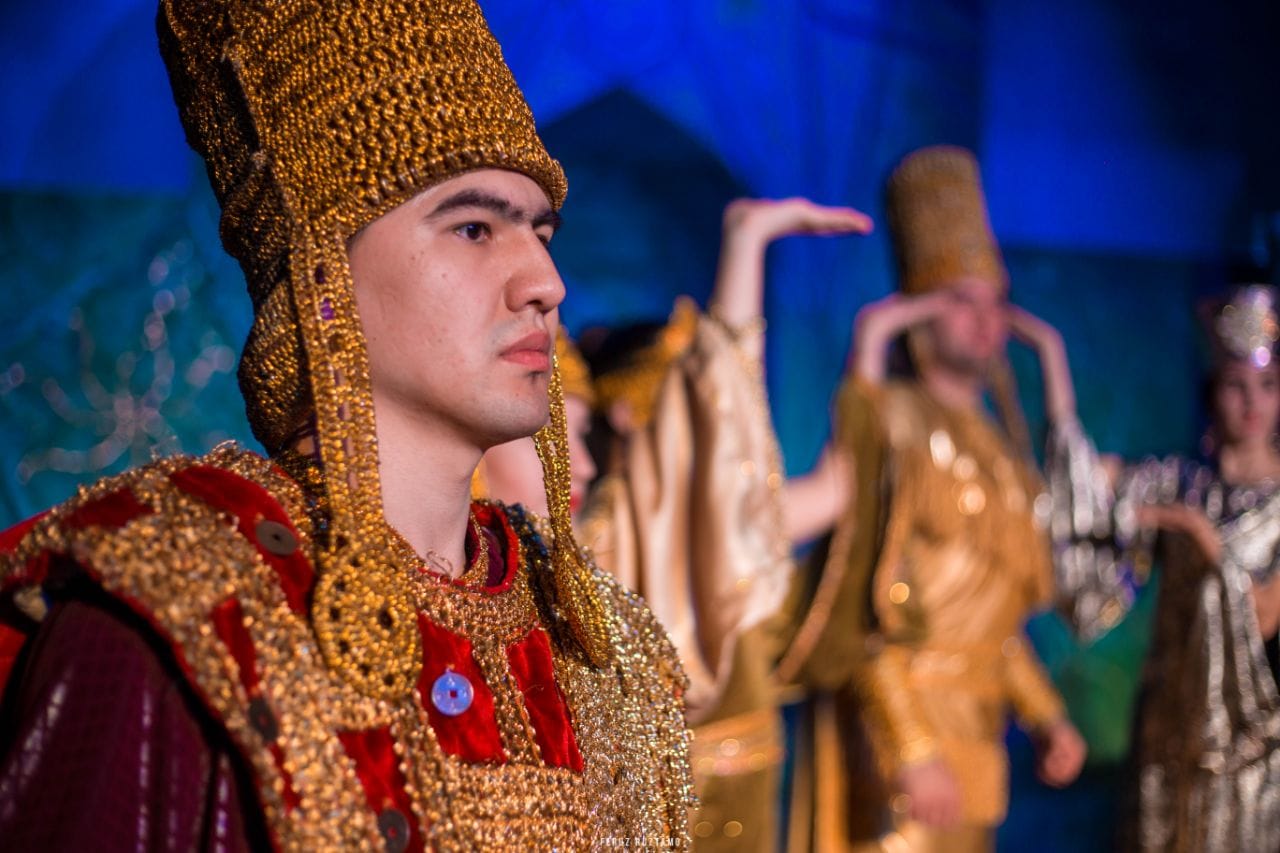
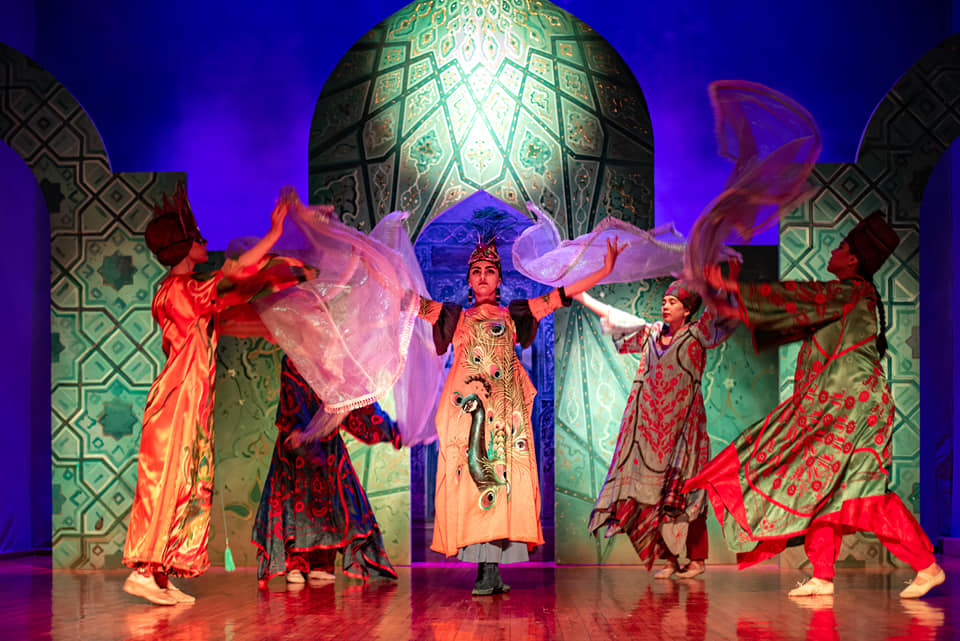
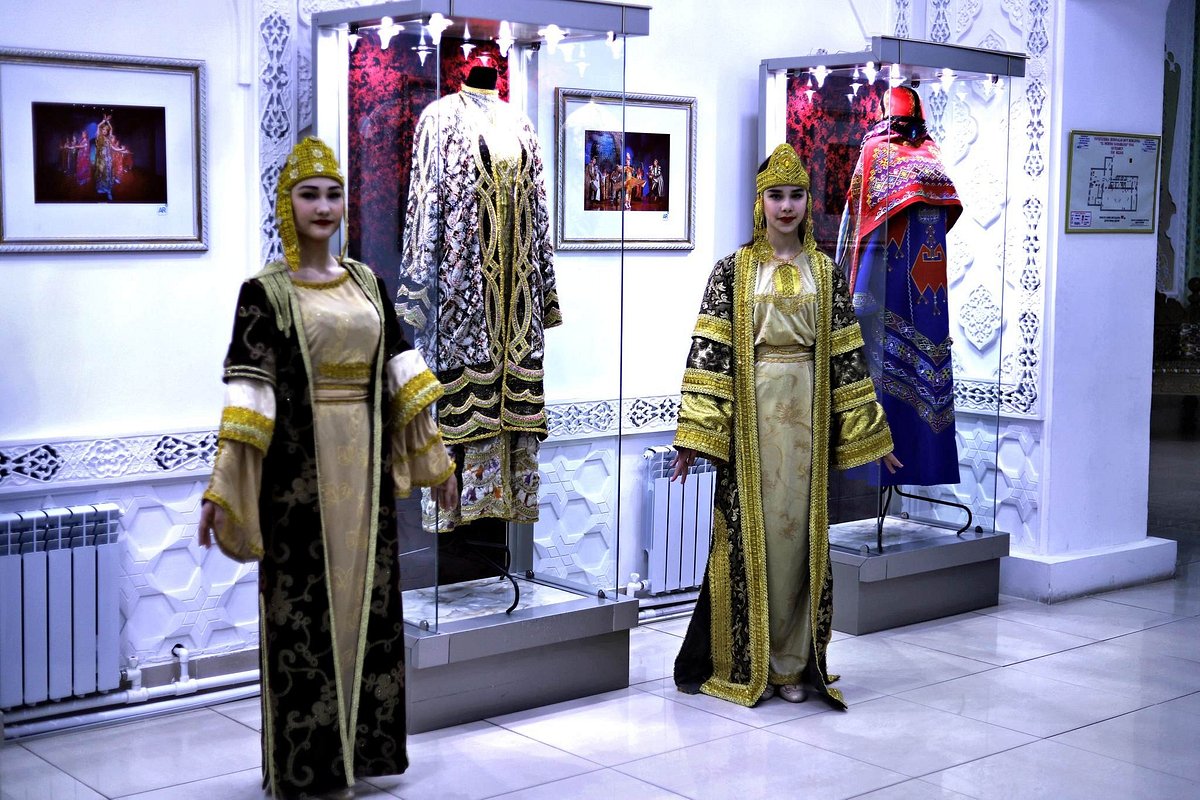
Images from the conference venue, Theatre of Historical Costume 'El Merosi'.