Short Course
Nicholas Culpeper’s Astrological Medicine
With Dr Graeme Tobyn
An online short course from the Sophia Centre and the Sophia Centre Press
5 Nov - 3 Dec 2026
The Sophia Centre short courses are part of the Sophia Centre’s academic and scholarly outreach programme. The Sophia Centre has been teaching the online MA in Cultural Astronomy and Astrology at the University of Wales Trinity Sant David since 2007. The short courses bring top-quality academic scholarship, open to everyone. Scroll down for all information and enrolment details.
We are delighted to welcome Dr Graeme Tobyn, the leading academic authority on astrology and western herbal medicine and the author of Culpeper’s Medicine (1997) and The Western Herbal Tradition (2011).
Recording
All seminars will be recorded. If you cannot attend live, you can watch the recordings, which will be available for two months after the course has finished.
What is this course about?
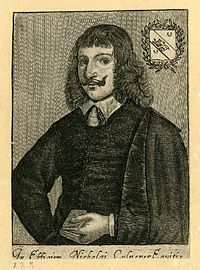
Nicholas Culpeper (1616-1654), English astrologer and herbalist, is renowned today for popularising an understanding of medicine that supported his readers to manage their own healthcare. His most famous work, a version of which is still in print, is his herbal The English Physitian (1652). This small book not only provided the best description of the time of native herbs, what they were used for and how they were processed into medicinal forms, but also taught how to gather any plant at an astrologically propitious hour for maximal effect when its ruling planet signified in a horary or decumbiture chart the cure or relief of a person in their sickbed. In this course Dr. Tobyn brings together Culpeper's teachings on astrological medicine into a coherent whole.
What you will learn on this course
This historical study of Culpeper’s method covers 5 themes:
1. The Astrologo-Physicall Discourse and the correspondences of natural astrology with the body
We look at Culpeper’s sources for his occult correspondences between planet, zodiac sign and parts of the body and the arguments he used to justify them. Not only this anatomy but also how the body operated – its physiology – was derived from a coherent explanation in physical and symbolic terms.
Reading:
[course recommended text] G. Tobyn (2013), Culpeper’s medicine: A practice of Western holistic medicine, London: Singing Dragon. ISBN 9781848191211
An Astrologo-Physical Discourse of the Human Vertues in the Body of Man; Both Principal and Administering, transcribed and annotated by Deborah Houlding, skyscript.co.uk/astrologo.pdf
Anthony Louis, Lilly’s Table for Assigning Natal Planets to Body Parts, tonylouis.wordpress.com
2. Lunar symbolism and typologies of temperance and intemperance
Most people in Culpeper’s day did not have the skills to draw up or read a horoscope but they were familiar with lunar symbolism from both gazing at the sky and reading almanacs. Here we look at this fundamental category of astrological correspondence and its relation to the four temperaments of the Greco-Arabic medical tradition.
Reading:
Graeme Tobyn, ‘Did the Astrological Content of Culpeper’s English Physitian Undermine its Usefulness?’, Culture and Cosmos, Vol. 26, no. 2, Autumn/Winter 2022, pp.35–53.
Dorian Gieseler Greenbaum (2005) Temperament: Astrology’s Forgotten Key, The Wessex Astrologer.
3. Horoscopes, diagnosis and prognosis
The key to Culpeper’s herbal was the horoscope at the back, through which he attempted to show the power of astrological symbolism in diagnosing disease. Using example horoscopes of the period, the aim of this session is to show how horary astrology can indicate the origins of personal illness and the best outcome of a period of sickness, if the right course is followed.
Reading:
Deborah Houlding, Learning Horary Astrology, www.skyscript.co.uk/horary_intro.html
Geoffrey Cornelius (2003), ‘The Question of Horary’, in The Moment of Astrology: Origins in Divination pp.98-123. The Wessex Astrologer.
4. Prescriptions for Galenic and Paracelsian cures
Culpeper published all his works in a very short period of time, exactly when the dissemination of information in English on Paracelsus’s method of healing became widespread. In this session we explore Culpeper’s prescribing of medicines and how this was influenced by both Galenic and Paracelsian medicine and the larger issues at stake for his desire to see a just system of healthcare in England.
Reading:
Bruce Moran (1993), ‘The “Herbarius” of Paracelsus’, Pharmacy in History, 35(3), pp.99-127,
John Wilkins (Blog, 2019), A Translation of Galen, Simple Medicines, I-XI, into English parts 1 & 2’, herbalhistory.org (part 1)
herbalhistory.org (part 2)
Graeme Tobyn, ‘Dr Reason and Dr Experience: Culpeper’s assignation of planetary rulers in The English Physitian’, knowledge.lancashire.ac.uk
John Riddle (1985), Dioscorides on Pharmacy and Medicine Austin, TX: University of Texas Press, www.scribd.com
5. The decumbiture method
A substantial part of Culpeper’s major astrological work, Semeiotica Uranica, Or an astrological judgment of diseases, was devoted to preparing decumbiture charts and predicting the outcome of healing crises according to the treatment of acute diseases in Hippocratic-Galenic medicine. Here we explore its ancient origins, its usefulness and method of employment.
Reading:
Dorian Greenbaum (2021), ‘Divination and decumbiture: Katarchic astrology and Greek medicine’, in Crystal Addey (Ed.) Divination and Knowledge in Greco-Roman Antiquity pp.109-37, London: Routledge.
Nicholas Culpeper (1655), Astrological Judgement of Diseases from the Decumbiture of the Sick, Astrology Centre of America.
Delivery
The course is taught live online using Zoom and each seminar will be recorded in order to enable you to follow the seminars if you cannot attend live. Each seminar will have time for Q & A's. You will be able to access the full course – recordings and handouts - for personal revision, the date TBA.
Moodle
All students will be able to log into the course page on Moodle where all the recordings of the lectures will be uploaded after each session. Also in this area are extensive support material plus a weekly discussion forum for additional questions or general comments.
Certificate of Attendance
All students will receive a Certificate of Attendance from the Sophia Centre Press and the University of Wales Trinity Saint David.
Dates
The seminars will be held on Thursdays at 4 pm – 6 pm UK time. There will be five seminars on 5 Nov., 12 Nov., 19 NOv., 26 Nov. and 3 Dec. 2026.
Teaching staff

Dr Graeme Tobyn PhD FHEA
I am a historian of medicine and science and an honorary research fellow at the University of Lancashire, having taught there for 24 years as a senior lecturer in herbal medicine and in health. Alongside this teaching I practised for 26 years as a herbalist, including a period working in the NHS. After graduating from Lancaster University with a PhD in history, I made the works of Nicholas Culpeper on astrological medicine a focus for my research, building on my earlier books Culpeper’s Medicine (1997) and The Western Herbal Tradition (2011), the latter written with university herbal colleagues. The resulting studies are published in peer-reviewed journals, the majority being open access.
Course Book
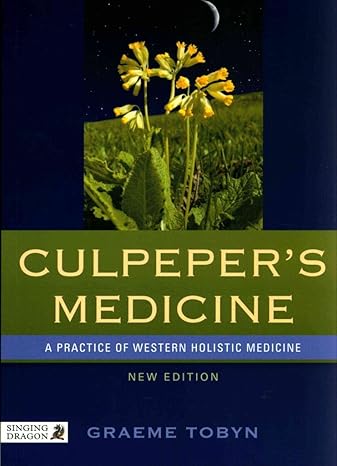
The recommended course book is Graeme Tobyn’s Culpeper’s medicine: A practice of Western holistic medicine(London: Singing Dragon, 2013). You can purchase from your favourite bookshop or from Amazon (below)
Buy UK www.amazon.co.uk
Buy USA www.amazon.com
Registration
The cost which covers all five lectures is £150 (GBP).
Students and graduates of the University of Wales Trinity Saint David can enrol at the University rate of £120 (GBP).
By registering I agree to follow the Sophia Project netiquette guide.
To register and pay, please click the link to Eventbrite.
Terms and Conditions
Fees and Refunds – Fees must be paid in full before the commencement of the course. Refunds will be made if studnts withdraw from the course before it commences. There are no refunds after students log into the Course Moodle page, which is opened up two days before the course begins.
Forum conduct - All students are expected to follow the netiquette guide and be respectful of other students and the tutor in their forum posts. The course tutor will remove any postings they consider to be inappropriate. The course tutor also reserves the right to block a student from posting on the forums if the student disregards a request by the tutor to revise their forum conduct.
Zoom conduct – Students attending the Zoom lectures live are expected to be focused on these lectures and only use the chat box for question directed at the lecture material. Students who misuse the chat box will be removed from the lecture.
Technology – It is the student's responsibility to ensure that they have sufficient broadband and sufficient skills in operating their computer or tablet to enable them to engage with this online course.
Sophia Centre Short Courses are taught as part of our outreach programme from the University of Wales Trinity Saint David. If you would like to take your studies further, you may apply for our unique, on-line, fully accredited Master's programme in Cultural Astronomy and Astrology, the only academic programme in the world to look explore our relationship with the sky, and the history, philosophy and culture of astrology.


Welcome to the public outreach page of the Sophia Centre for the Study of Cosmology in Culture at the University of Wales Trinity Saint David, with information about studying with the University, as well as links to related conferences, classes, publications and events. To go straight to the Sophia Centre's University page please go here.
Please follow our guidelines on Netiquette.
Click the link below to join our mailing list to keep informed of Sophia Centre events:
Mailchimp
Upcoming Events
2027
11-12 May,
Sophia Centre
Annual conference 2027
8-10 May,
Sophia Centre
Summer School 2027
16 Jan,
Sophia Centre
London Conf. 2027
2026
5 Nov-3 Dec,
Sophia Centre
Short Course
4 Nov,
Alumni lecture
Liz Hathway